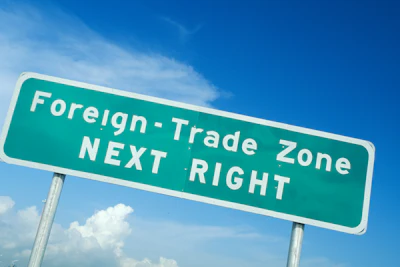
U.S. Congressman Aaron Bean (FL-04) and U.S. Congresswoman Marilyn Strickland (WA-10) launched the Congressional U.S. Foreign-Trade Zone (FTZ) Caucus to promote and educate members and the public about the use and benefits of U.S. foreign trade zones.
Specifically, the bipartisan caucus will serve as a forum for lawmakers, economists, industry leaders, and policy experts to discuss the economic benefits of U.S. FTZs and explore opportunities to improve supply chain efficiency, encourage investment, and support economic growth in communities across the nation.
“U.S. Foreign-Trade Zones help American companies do what they do best—make, move, and sell their products more efficiently. That means stronger manufacturing, better-paying jobs, and more competitive businesses in Northeast Florida and across the nation. I’m proud to launch this bipartisan caucus with Congresswoman Strickland to ensure Congress has a clearer understanding of how U.S. FTZs function and to advance policies that support and strengthen our economy, support American workers, and enhance our global competitiveness,” says Congressman Bean.
“Foreign Trade Zones boost our local economies, create jobs, and prioritize U.S. manufacturing. Washington state is a strong trade partner, and this caucus helps ensure the U.S remains a top manufacturing and trade competitor,” adds Congresswoman Strickland.
Key takeaways:
· The U.S. Foreign-Trade Zone (FTZ) program was created by Congress in 1934 to incentivize U.S. manufacturing and distribution, specifically in cases where foreign entities maintain a tariff advantage. In 2024, 543,000 people were employed in 1,300 active U.S. FTZ operations nationwide, and U.S. FTZ exports accounted for 6.5% of total U.S. exports by value.
· U.S. FTZs are secure areas within the United States that are considered outside of U.S. Customs territory for tariff purposes. Housed under the Department of Commerce, the FTZ Board reviews all U.S. FTZ applications. Customs and Border Protection (CBP) must then also review and inspect each facility prior to approving its activation. Once operational, CBP oversees the daily operations of U.S. FTZs.
· Foreign Trade Zone (FTZ) No. 64 is Florida’s largest foreign trade zone, responsible for over $4.6B in economic activity and connecting Northeast Florida to more than 10 countries and providing logistics, storage, and customs support to some of the nation’s leading companies.