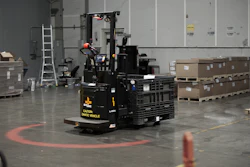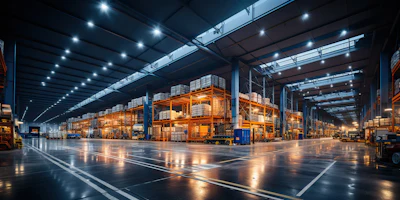
For years, the logistics industry has talked about the idea of the “lights-out warehouse,” -- a facility so automated that operations can run with little human intervention.
The concept is no longer theoretical. Robotics, machine learning, and computer vision are rapidly changing how freight moves through supply chain infrastructure. Globally, millions of warehouse robots are already in operation, and adoption continues to accelerate as companies seek to increase throughput and reduce operational complexity.
But the most interesting place automation is taking shape is not in traditional storage warehouses. It is happening in the cross-dock.
Cross-docks sit at the center of the middle mile, where freight moves between fulfillment centers, distribution hubs, and regional markets. These facilities determine how efficiently inventory flows through a network, yet most still rely on manual processes designed decades ago.
The next generation of cross-dock facilities will look very different. Instead of relying on human coordination to move freight through the building, automation and robotics will orchestrate the entire journey from inbound arrival to outbound departure.
A fully autonomous cross-dock starts with software.
Automating the flow of freight
In an autonomous facility, decisions about how freight should move are made before a truck even arrives.
Machine learning systems analyze network conditions across shipments, facilities, and transportation capacity. The software determines how freight should flow through the cross-dock, which shipments should consolidate together, and which outbound routes they should take.
By the time a truck approaches the building, the system already knows what freight is arriving and where it needs to go next. This orchestration layer is critical. Automation works best when the facility is operating as part of a coordinated network rather than as an isolated warehouse.
Computer vision creates a digital warehouse
Once freight enters the facility, the system must understand what is physically happening inside the building.
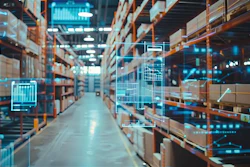
One emerging approach involves installing camera systems throughout the warehouse and using computer vision to create a real-time digital model of the operating environment. This allows software platforms to track where freight is located, how it moves across the floor, and where congestion or delays begin to develop.
Computer vision effectively turns the warehouse into a machine-readable environment. Instead of relying on manual scans or human supervision, the system can monitor operations continuously and update its understanding of the facility in real time.
This digital layer becomes the foundation for automation.
Automated receiving and robotic freight identification
In an autonomous cross-dock, freight is identified and routed the moment it enters the building.
As pallets, parcels, or mixed freight arrive, automated scanning systems capture shipment data using barcodes, vision systems, or RFID tags. The facility software immediately links that freight to its outbound destination and determines where it should move next.
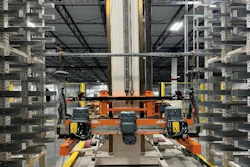
From there, automated material-handling systems take over. Conveyor networks and sortation equipment direct shipments to the correct outbound staging lanes based on destination, service level, or route. Sortation systems classify items and route them automatically through the facility using predefined rules and algorithms.
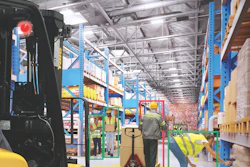
Robotic systems can also move freight between dock doors. Autonomous mobile robots and automated vehicles transport pallets across the floor, reducing the need for manual handling and improving speed and accuracy in cross-dock operations. These systems excel at repetitive tasks such as unloading trailers, transporting freight, and feeding automated sortation systems.
Because robots can operate continuously, the facility can maintain steady throughput without relying on shift changes or manual labor availability. The result is a facility where freight is identified, routed, and positioned for its next truck almost immediately after it arrives.
Continuous optimization and exception management
A fully autonomous cross-dock does more than execute a plan. It continuously adapts as conditions change.
Because the facility is connected to transportation software, robotics systems, and real-time sensor data, the platform can monitor how freight is moving through the building and across the broader network. If inbound shipments arrive late, outbound capacity shifts, or congestion begins to form near certain dock doors, the system can automatically adjust staging assignments and loading priorities.
Machine learning models analyze these conditions continuously, identifying potential disruptions before they impact the network. The system can then rebalance outbound loads, adjust departure timing, or reroute freight through alternate paths in the network.
This ability to adapt in real time is what transforms a robotic warehouse into a truly autonomous logistics node. Instead of following a fixed operating plan, the cross-dock becomes an intelligent part of the transportation network, constantly optimizing how freight moves through the building and onto the next leg of its journey.
Lights-out cross-docks represent the next major shift in logistics infrastructure. When software, robotics, and network orchestration operate together, freight can move through facilities with far greater speed, consistency, and efficiency. The result is a supply chain that is not just automated, but continuously self-optimizing.