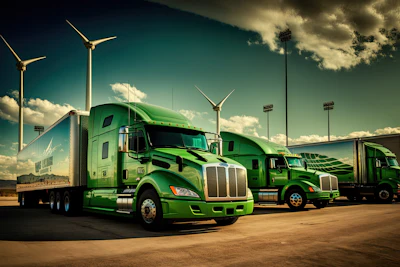
Supply chain leaders are operating in an energy environment defined by competing pressures and a constantly shifting status quo. The conflict in Iran is pushing the global oil market to heights estimated to rival or even exceed the 2022 energy crisis, with prices hitting a four-year high in late April. Diesel prices have surged alongside this volatility, intensifying cost pressures and exposing the risks of relying on globally influenced fuel sources. Combined with decarbonization benefits and federal favoritism of American-made fuels, operators are increasingly looking toward domestic energy solutions to maintain service reliability and control escalating costs.
When considering alternatives to diesel, focusing on long-term electrification and hydrogen isn’t a practical solution, especially for trucking, where the near-term reality is far more complex for long-haul, heavy-duty freight. The challenge is not just identifying stable, low carbon emission fuel sources for the future, but deploying solutions that work at scale today.
Advances in technology, paired with the rapid expansion of renewable natural gas (RNG) infrastructure, are now positioning natural gas as a commercially viable, performance-ready pathway for low-cost heavy-duty fleet operations. At the center of this shift is a new generation of high-efficiency natural gas engines, which allow supply chain leaders to conduct cost-effective, long-haul freight and take advantage of renewable and domestic energy benefits without sacrificing performance.
Fuel cost stability and new value creation for fleet owners
Volatility in fuel costs, particularly in unstable global markets like those seen during the recent oil crisis, create unpredictable operating conditions that complicate long-term planning and threaten margin stability for fleet owners. Prior to recent geopolitical disruptions, domestic RNG suppliers could confidently offer fuel at $1.75 to $2.25 per gallon in most states, compared to diesel prices ranging from $3.50 to $4.50. Today, even as diesel prices have surged to between $5.50 and $8 per gallon, RNG pricing has remained relatively stable in that same $1.75 to $2.25 range, further expanding the cost gap and reinforcing RNG’s value as a cost-control strategy.
Domestic fuel options like RNG are providing a stable alternative, backed by legislation like the One Big Beautiful Bill, the Section 45Z Clean Fuel Production Credit and a variety of state low carbon fuel programs. Fleets can tap into these domestic energy advantages while reducing exposure to global price swings, and advances in natural gas engine technology puts performance on par with diesel.
For fleet operators, this ensures predictable fuel costs and long-term operational savings without compromising performance. Engines accelerate this momentum, delivering the torque and durability required for long-haul trucking and positioning natural gas as a strategic solution for cost stability in heavy-duty freight operations.
RNG as a scalable path to net-zero supply chains
While natural gas delivers immediate operational benefits, RNG elevates it into a scalable, long-term decarbonization strategy that doesn’t require additional infrastructure.
Produced from organic waste streams such as landfills, dairy farms and wastewater treatment facilities, RNG captures methane that would otherwise be released into the atmosphere and converts it into a carbon net-zero, pipeline-quality fuel. Fully compatible with existing natural gas systems, RNG is distributed through today’s pipeline networks and available at current fueling stations, allowing fleets running natural gas engines to adopt it seamlessly.
That infrastructure advantage is already supporting rapid growth. RNG supply has increased by 400% since 2018, with 2025 marking the second consecutive year of record-high growth in North America, including 130 new operational facilities. At the same time, federal and state initiatives are increasingly recognizing RNG as a critical component of clean energy strategy and domestic energy resilience. In states like California, Oregon and Washington, low carbon fuel standards and related programs create additional economic incentives for RNG adoption, enabling suppliers to further reduce costs at the pump and deliver even greater savings to fleet operators. There are also turnkey solutions that make it seamless for organizations to lease, maintain and fuel vehicles using RNG.
Together, these factors position RNG not as a future solution, but an already available pathway to lower-emissions freight, built on growing infrastructure that fleets can access today.
A practical path forward for heavy-duty decarbonization
What is emerging across the supply chain and transportation sector is not a theoretical transition, but a practical one already underway. Advancements in engine technology have resolved many of the historical limitations of natural gas and achieved performance expectations for long-haul, heavy-duty freight. Fuel supply and infrastructure are scaling to meet industry growth, and policy frameworks are increasingly supportive of RNG and domestic energy.
Together, these shifts are redefining natural gas from an alternative fuel option into a mainstream fleet strategy. Supply chain operators do not have the luxury of waiting for perfect solutions, especially with rising diesel prices and a volatile global fuel market. They need cost-effective systems that work at scale, perform reliably and deliver measurable improvements today. Advances in natural gas engine technology, combined with the rapid development of renewable natural gas, are delivering exactly that.
RNG offers a commercially viable pathway that balances economic and operational priorities with sustainability goals. It delivers greater fuel cost stability, ensures the operational reliability required for demanding fleet performance, and enables meaningful emissions reductions, all while maintaining compatibility with existing and future fueling infrastructure. These advantages position RNG as a practical, forward-looking solution for organizations navigating the transition to lower-carbon transportation.
As fleets evaluate their next generation of investments, renewable natural gas powered by advanced engines should be viewed not as an alternative strategy, but as a core component of a practical, scalable decarbonization roadmap for cost-effective heavy-duty transportation.
![Top Tech Logo 2026 Vertical [color]](https://img.sdcexec.com/mindful/acbm/workspaces/default/uploads/2026/04/top-tech-logo-2026-vertical-color.mWl7RAiZmg.png?auto=format%2Ccompress&bg=fff&fill-color=fff&fit=fill&h=100&q=70&w=100)





![Top Tech Logo 2026 Vertical [color]](https://img.sdcexec.com/mindful/acbm/workspaces/default/uploads/2026/04/top-tech-logo-2026-vertical-color.mWl7RAiZmg.png?ar=16%3A9&auto=format%2Ccompress&bg=fff&dpr=2&fill-color=fff&fit=fill&h=135&q=70&w=240)


