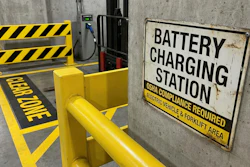
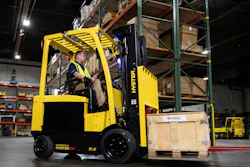
Warehouse electrification has moved from a fleet decision to an infrastructure decision. The operators who recognize this shift position themselves for a meaningful competitive advantage in both reducing risk and operational cost while staying flexible against the disruptions that define modern supply chain operations.
For the past decade, going electric meant picking the vehicles and the batteries. But as multi-site rollouts have continued and mixed fleets have become the norm, the questions that determine success have changed. Shared electrical capacity and charging architecture that supports years of fleet growth are now the levers that separate a strategic rollout from one that stalls.
The signs that fleet-first thinking has hit its limit are visible across the operation. In a healthy electrified fleet, vehicles like forklifts should be either operating or on charge. When charging infrastructure can't keep pace with the fleet, you start to see the opposite: vehicles parked but not being charged, vehicles running flat mid-shift, operators swapping vehicles in and out of a limited pool of chargers in an ad-hoc rotation or using the wrong vehicle type for a job because the right one isn't ready. Each of these symptoms can be costly since they slow down operations, and it highlights that the infrastructure needs to be addressed.
From battery change to opportunity charge: A shift that moves the bottleneck
One of the most significant transitions in this industry is the move from battery change to opportunity charging. It illustrates exactly why charging infrastructure has to be designed as facility infrastructure.
Under the older lead-acid battery-change model, a single forklift might require multiple batteries to operate around the clock. In a 24-hour operation, that could mean as many as three batteries per vehicle: one in use, one charging, one cooling down after a charge. With each of those batteries weighing half a ton or more, the facility would need dedicated machinery to charge them outside the vehicles, dedicated space to store them and dedicated employees just to manage the changes.
Lithium-ion changes this approach. Modern lithium-ion batteries can be charged five to ten times faster than traditional lead-acid, which means the battery can stay in the vehicle and be opportunity-charged during natural breaks in the operation. That reclaims floor space, eliminates dedicated labor and reduces total energy consumption.
However, this shift comes with its own new bottleneck. Charging 5-10 times faster requires 5-10 times the power, which means the same operation that uses less total energy now draws that energy in much higher peaks. For operators scaling without rethinking their electrical infrastructure, that's where things can break down.
Designing for the fleet you'll have, not the one you have now
The most valuable charging infrastructure decisions are the ones that give operators control over how the fleet performs, scales and adapts. Four variables, designed together, shape what becomes possible.
Shared electrical capacity.
Smart load management coordinates which chargers draw power and when, based on what the facility's electrical service can supply at any given moment. Operators can add more vehicles without upgrading their electrical service to match. More vehicles can be supported by the same incoming power, peak demand charges drop and adding on-site energy storage covers off-peak savings and short outages.
2. High efficiency charging.
Efficiency can be looked at in two ways – reduction in cost and better use of capacity.
When reducing cost, 97% efficiency means that to provide 100 units of energy needed for a fleet, the charger requires 103 units of input, compared to 118 for a typical 85% efficient charger. Those additional 15 units have a real energy cost impact. When getting more out of your existing supply capacity, 97% efficiency means that from 100 units of input energy, 97 of those sustain your fleet, compared to 85 for a typical 85% efficient charger. That additional 12 units could be the difference between success and downtime.
3. Modular charger architecture.
Modular industrial chargers built from interchangeable power units let operators start at the capacity they need today and scale up as fleet size or operational tempo grows without replacing the underlying equipment. Modularity also protects uptime at the vehicle level: if one module needs service, the charger keeps operating at reduced capacity rather than going offline.
4. Battery chemistry flexibility.
Facilities accumulate equipment running on different chemistries and voltages, including lead-acid, lithium-ion and emerging sodium-ion all coexisting under the same roof. Older charging setups locked each charging position to a single battery type, but modern charging infrastructure that automatically identifies and charges a wide range of battery voltages and chemistries removes that constraint.
This kind of flexibility is especially valuable during seasonal peak times when distribution operators bring in 10-20% additional material handling equipment. Charging infrastructure that can absorb that shift without intervention is critical to hold the operation together.
The end state operators are moving toward is the generic charging bay: any vehicle in the facility can pull into any bay and be charged correctly. Less operator training, no chargers sitting idle waiting for the "right" vehicle and full flexibility when the fleet mix shifts.
What supply chain leaders can bring into the conversation now
The most useful reframe supply chain leaders can focus on is "which charger" to "which infrastructure strategy." Specific questions worth raising with operations teams and vendors:
● How is shared electrical capacity managed, and does that approach scale as fleet size grows and peak charging power increases?
● Does the charging architecture support the battery chemistries we expect to be using in five years, not only today's fleet?
● What's the modular path? Can capacity grow without replacing equipment?
● How does our energy storage and renewable integration roadmap align with the charging infrastructure we're selecting?
● How does the infrastructure perform under disruption? Can we reallocate vehicles between chargers, accommodate rentals and stay operational when one element goes offline?
Where strategic infrastructure pays off
The flexibility that comes from treating chargers as facility infrastructure is insurance against downtime. When disruption occurs, operators can reallocate vehicles, bring in rentals on different chemistries and keep moving.
The sustainability benefits compound from there. The same architectural choices that reduce downtime risk also reduce energy consumption and emissions per vehicle-hour. Upgrading a 20-vehicle 48V fleet from 85% to greater than 97% peak efficiency chargers can save approximately $6,170 annually in energy costs and reduce annual carbon emissions by roughly 135 MtCO2, equivalent to planting 6,500 trees per year. For operators with corporate sustainability commitments, those outcomes are meaningful. But they're the byproduct of decisions that also make operational sense.
Charging infrastructure is a defining decision in warehouse fleet electrification. The operators who treat charging as facility infrastructure position themselves for fleet growth, utility flexibility and operational resilience and shape how successfully their operation scales for years to come.