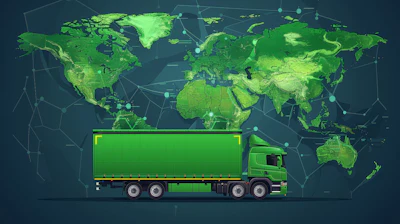
Walk through any fulfillment center today and you’ll find lithium-ion batteries everywhere. They’re in power tools, e-bikes, emergency flashlights, solar generators stacked near the dock door. Demand is surging, and the supply chains behind it are scrambling to keep pace. What most of those supply chains aren’t doing though is keeping pace with the regulations designed to move those batteries safely.
When lithium-ion batteries are either mislabeled, misclassified, or handled by undertrained workers, the consequences can have impacts beyond the warehouse floor. Thermal runaway fires release toxic gases (including hydrogen fluoride, carbon monoxide, and volatile organic compounds) that linger in surrounding communities long after flames are extinguished. Cargo fires at sea can burn for days, contaminating surrounding water with heavy metals like cobalt or nickel, that leach from battery cells and accumulate in marine ecosystems. Aviation incidents, which the FAA tracked at a record 89 in 2024 alone, force emergency landings and create environmental and safety risks that extend far beyond the aircraft. The environmental and human costs of a single preventable incident minimize whatever was saved by cutting corners on compliance.
The environmental toll nobody measures
Beyond incidents, there is a quieter sustainability crisis embedded in everyday noncompliance. When batteries are misclassified and returned through standard reverse logistics channels, they frequently end up in general waste streams rather than regulated battery recycling programs. A single improperly disposed lithium-ion battery can contaminate soil and groundwater at a disposal site for years. Multiply across millions of e-commerce returns annually (many of which are handled by 3PLs with no hazmat-specific reverse logistics protocol) and the cumulative environmental damage is significant.
The extraction footprint of lithium-ion batteries is already substantial. Lithium mining is water-intensive in some of the world's most arid regions and cobalt sourcing carries well-documented environmental and human rights concerns. When batteries are wasted, destroyed in fires caused by noncompliant shipping, improperly disposed of, or lost to damage from inadequate packaging, that upstream environmental cost is paid for nothing. Compliant handling is about protecting the full-lifecycle investment the supply chain has already made in these materials.
Standard 3PL protocols were not built for this
Most third-party logistics (3PL) providers built their operations around general freight, which are systems that work well for the vast majority of what moves through them. But lithium-ion batteries, depending on size, configuration, state of charge, and how they’re packed, fall under strict DOT, OSHA, and PHMSA standards that general freight protocols simply were not designed to handle.
The classification process alone trips up even the most experienced teams, mostly due to additional training requirements. A battery packed with equipment carries different protocols than a battery packed separately, watt-hour ratings determine which UN identification number applies, and packaging groups, quantity limits, and labeling requirements shift based on whether a shipment moves by ground, air, or ocean. Miss even one of those variables, and you create a fire hazard that could put the lives of carries, postman and even consumers at risk.
PHMSA’s 2025 civil penalty ceiling sits at $99,756 per violation, rising to $232,762 when a violation results in serious injury, illness, death, or substantial property destruction. Those fines can grab attention, but they’re still only a fraction of what a single incident can cost in inventory loss, carrier restrictions, legal exposure, and environmental damage.
Where companies keep getting it wrong
The most common mistakes are simple errors that happen when speed outpaces discipline, with classification being the most persistent problem. Teams that apply general product logic to battery shipments routinely assign the wrong UN number or skip hazard class markings entirely. That mismatch can create a chain reaction where carriers reject at tender, retailers hold inbound, returns processing stalls, and if the product gets through, it moves through a network that doesn’t know what it’s actually carrying.
Packaging failures follow closely behind as lithium batteries require inner packaging that prevents short-circuit, outer packaging rated for the hazard class, and in many cases state-of-charge limits before the box can be closed. Companies repacking or rebranding products mid-supply chain frequently lose track of those requirements. The product looks the same, but the label does not match what’s inside.
Training gaps make both of those problems worse. Hazmat employees under federal regulations must receive function-specific training and recertification every three years. In high-turnover environments, that standard is difficult to maintain consistently. Temporary workers brought in for peak season are especially vulnerable to these gaps. When someone who doesn’t understand thermal runaway is the last set of hands touching a battery shipment before it goes on a truck, the system has already failed.
Why regulatory rigor is accelerating
For years, hazardous materials oversight in the fulfillment and e-commerce space lagged behind the pace of the market. That era is set to end with several movements across the industry, including:
· PHMSA steadily escalated enforcement, issuing record civil penalties and expanding compliance resources, including a comprehensive Lithium Battery Guide for Shippers finalized in late 2024.
· The CPSC has issued warnings on non-compliant battery products sold through major online marketplaces.
· The FAA continues to log rising battery incidents in both passenger and cargo contexts (40% rise in lithium-ion battery incidents in the last five years).
· Congress passed legislation directing mandatory safety standards for rechargeable batteries in micromobility devices, and proposed bills would extend platform accountability to e-commerce sellers shipping hazmat products.
This trajectory mirrors what happened in food safety over the past decade. When FSMA pushed companies that had treated food safety as a documentation exercise, they scrambled. The same shift is happening now in hazardous materials. The enforcement is arriving whether or not supply chains are ready for it.
Sustainability regulation is adding another layer. The EU's Battery Regulation, which is already reshaping how battery products are designed and documented, is beginning to influence what US importers and distributors are expected to track and report. Carbon disclosure frameworks are increasingly requiring companies to account for emissions from hazardous material incidents, not just routine operations. ESG reporting standards are evolving to include supply chain environmental risk, and a poorly handled battery shipment that results in a cargo fire is exactly the kind of event that ends up in a materiality assessment.
The sustainability need beyond compliance
Retailers and brand owners who have made public commitments to responsible sourcing and reduced environmental footprint increasingly need to apply that standard to how their products move, not just how they're made. A brand that sources ethically and manufactures responsibly but ships through a non-compliant 3PL is carrying environmental liability. And when a fire occurs, it’s the brand's name is on the box, not the logistics provider's.
Enforcement is arriving whether or not supply chains are ready for it. When cargo fires destroy freight, the environmental loss is rarely measured in quarterly reports. Contaminated ocean water, air quality events near distribution centers, and hazardous waste from improperly disposed batteries all represent costs that don't show up on a balance sheet, but the reality is, it is communities absorb them, and regulators are increasingly connecting those dots.
The hard truth about cost and quality
There is a conversation the industry keeps avoiding, how cheap fulfillment and safe battery shipping are incompatible. Compliant hazmat operations require specialized training infrastructure, maintained and documented across a workforce with real turnover. They require live classification data tied to every SKU, not general product attributes copied from a catalog. They require packaging controls, print quality checks, and placement standards for every label on every carton. They require carrier relationships built around hazmat acceptance, not just rate negotiations.
Shippers evaluating fulfillment partners for battery and hazmat products need to ask harder questions than they’re currently asking. Not just “do you handle hazmat?” but “What does your hazmat employee training program look like, and how do you document it?” Not just “can you ship lithium batteries?” but “How do you handle classification exceptions when a product’s watt-hour rating changes between SKUs?” Those answers will tell you more than any rate card.
The shipment liability
Electrification isn’t going to slow down, it’s getting into more product categories every year with lithium-ion batteries being the backbone to major new products. But with that comes regulatory scrutiny.
Every battery that leaves a dock is a decision. The question is whether the operation behind it is built to make that decision correctly, every time, at scale, to protect not only the products, but the communities, ecosystems, and circular supply chains they encounter.

![Top Tech Logo 2026 Vertical [color]](https://img.sdcexec.com/mindful/acbm/workspaces/default/uploads/2026/04/top-tech-logo-2026-vertical-color.mWl7RAiZmg.png?auto=format%2Ccompress&bg=fff&fill-color=fff&fit=fill&h=100&q=70&w=100)





![Top Tech Logo 2026 Vertical [color]](https://img.sdcexec.com/mindful/acbm/workspaces/default/uploads/2026/04/top-tech-logo-2026-vertical-color.mWl7RAiZmg.png?ar=16%3A9&auto=format%2Ccompress&bg=fff&dpr=2&fill-color=fff&fit=fill&h=135&q=70&w=240)


