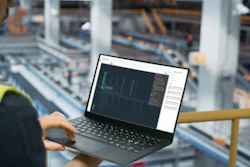
For Philip Rosenmüller, lack of transparency in fleet data and fleets running longer than they should are the two most common challenges many of today's supply chains face.
"I always say, a forklift doesn't become expensive when you buy it, it becomes expensive when you keep it too long," he says.
That's why Rosenmüller, head of fleet management and consulting for CHG-MERIDIAN, developed a replacement strategy targeted at the highest cost, highest risk assets, and saving the company approximately $2.5 million in Q4 alone.
"The project started with a situation that is actually quite common in large global organizations. -- a very large and diverse fleet, spread across multiple locations and countries, with very limited visibility of their fleet data and true lifecycle costs," he adds.
Rosenmüller brings a rare combination of hands-on operational experience, financial insight, and global perspective to the material handling world, working directly with Fortune 1000 companies in the United States and globally to analyze, advise, and optimize their material handling operations.
His day-to-day includes reviewing complex asset data, identifying inefficiencies, and developing practical recommendations that improve equipment usage, training approaches, and financial structures.
He also travels domestically and internationally to warehouses, logistics hubs, and related facilities to evaluate operations firsthand and guide improvements across logistics, supply chain, and financial processes.
A key part of Rosenmüller's value is his ability to analyze asset data in a way that most companies struggle to do on their own. He identifies patterns in maintenance, utilization, damage, and downtime that reveal hidden costs and inefficiencies. From there, he builds strategies that help companies reduce total cost of ownership, extend equipment life where appropriate, and replace assets proactively when data shows costs will soon spike. As a result, he's saved multiple large enterprises millions of dollars by helping them optimize their fleets, renegotiate legacy contracts, streamline vendor relationships, and eliminate practices that were quietly draining their budgets.
Over the past 12 months, Rosenmüller led a major consulting engagement with a multinational corporation, where he built a comprehensive picture of the company's global fleet, identified exactly how many lift trucks they had, documented their condition, and surfaced the true cost impact of keeping aging or underperforming units in service. Using this data, he developed a replacement strategy targeted at the highest-cost, highest-risk assets, thus saving the company approximately $2.5 million in Q4 alone.
His focus for the coming year is to continue optimizing the supply chain, logistics, and material handling operations by establishing clear operational baselines, correcting long-standing inefficiencies, and adopting data-driven fleet strategies that reduce risk and improve performance at a global scale.
Rosenmüller is a recipient of this year’s Pros to Know award, in the Leaders in Excellence category. He sat down with Marina Mayer, Editor-in-Chief of Food Logistics and Supply & Demand Chain Executive and Co-Founder of the Women in Supply Chain Forum™, to talk about optimizing the supply chain, logistics, and material handling operations.
CLICK HERE to learn more about all of this year's Pros to Know award winners.
Supply & Demand Chain Executive: Hello, my name is Marina Mayer, Editor-in-Chief of Food Logistics and Supply and Demand Chain Executive, and I'm here with Philip Rosenmuller, Head of Fleet Management and Consulting for CHG Meridian. Philip is a recipient of this year's Pros to Know Award in the Leaders of Excellence category.
Philip, thank you so much for joining me today.
Let's talk about you. Tell us a little bit about yourself and your journey, and how you got to this current stage in your career.
Philip Rosenmuller: I've spent more than two decades working in the material handling industry, and during that time, I've had the opportunity to see, businesses and industries, globally, from multiple perspectives, technically, operational, and financially.
My career started very close to the operational side of material handling, which gave me a strong understanding of the fleets, their requirements, and the application where the forklifts and industrial vehicles are running.
Over time, I moved more into a strategic role, where the focus shifted from an individual machine to a bigger picture. Like, how fleets are structured, what the global requirements are for multinational corporations, how the equipment is financed, and how the impact and supply chain performance and overall costs appear.
Today, as a head of technical sales for industrial equipment and MHE Fleet Management, my role is to help global companies rethink how they manage their material handling fleets, like, instead of treating forklifts and AGVs like individual pieces of equipment, we look at them as part of a larger lifecycle system that directly influences productivity, cost efficiencies, and operational resilience.
Supply & Demand Chain Executive: One of the things outlined in your submission form is how you bring a combination of hands-on, operational experience, financial insights, and global perspective to the material handling world. What are some of the common challenges today's material handling providers face, and how do you help them solve these challenges?
Philip Rosenmuller: One of the most common challenges we see across industries is a lack of transparency in the fleet data. So many organizations operate hundreds or thousands of vehicles across different locations and countries, and to manage a large fleet with thousands of pieces of equipment is a forge and a task. And the data about utilization, maintenance, contracts, and the equipment age is often fragmented and outdated, or it's just not available.
And this is what we see, that managing a large fleet is difficult, and with many data sources and different languages and contractual partners, often managed by Excel spreadsheets, so that's difficult to manage, and we help our customers to really consolidate data, provide transparency on a global level.
And another major issue, what we see is that fleets are used beyond their economic life cycles. So companies tend to keep trucks running longer than they should because replacing them seems like a capital expense.
But what often happens is that maintenance costs and downtime increases significantly, which ultimately drives up the total cost of ownership.
I always say, a forklift doesn't become expensive when you buy it, it becomes expensive when you keep it too long.
Supply & Demand Chain Executive: Over the past 12 months, you led a major consulting engagement with a multinational corporation where you developed a replacement strategy targeted at the highest cost, highest risk assets, and saving the company approximately $2.5 million in Q4 alone. Walk us through, kind of, how this started, the problems you identified, and what tools you put in place to optimize their global fleet.
Philip Rosenmuller: The project started with a situation that is actually quite common in large global organizations. A very large and diverse fleet, spread across multiple locations and countries, with very limited visibility of their fleet data and true lifecycle costs.
Our first step was to conduct a comprehensive fleet assessment and data gathering, where we gathered important fleet data and analyzed the fleet status quo, like the age, the hours, the model variety, manufacturer diversity. And this analysis helped us to identify which assets were driving the costs and needs to be replaced. Then we implemented a replacement program.
And, this program we rolled out in multiple countries and replaced the fleet, partially, and this program will last over the next years to get into a lifecycle strategy and system.
And the cost avoidance, or the reduced maintenance cost for newer, more efficient equipment, is part of the cost saving, as well as a smart financial program behind it to finance the equipment.
Supply & Demand Chain Executive: And your focus for the coming year is to continue optimizing the supply chain logistics and material handling operations. What are some of the main trends or themes that you're seeing that will impact both national and international supply chains?
Philip Rosenmuller: One of the most visible trends at the moment is automation. Technologies such as AGVs, autonomous mobile robots, are becoming increasingly attractive as companies deal with labor shortages and rising productivity expectations.
At the same time, we're seeing a shift toward data-driven fleet management. Organizations are beginning to realize that managing fleets based on lifecycle data rather than reacting to breakdowns can significantly reduce costs and improve uptime.
Another major theme is sustainability and electrification. Lithium-ion battery technology, energy-efficient equipment, and reduced carbon footprints are becoming the key decision factors for many companies out there.
And finally, supply chains themselves are evolving. Companies are focusing more on resilience and flexibilities, which also means that their material handling infrastructure needs to be more adoptable.
Flexibility is more and more important to react on market, changes and changes in demands, changes in your production volumes. What ties all of these trends together is the need for strategic fleet planning and having the right contracts and strategy for your fleet.
Technology alone does not solve problems. Companies need a clear roadmap for integrating these innovations into their operations.
Supply & Demand Chain Executive: The Leaders in Excellence category honors company leaders who've made outstanding contributions in the supply chain space. What advice do you have for other professionals and leaders in supply chain?
Philip Rosenmuller: One piece of advice I often share is to look beyond individual assets and think in systems and strategies.
Three key areas to focus on. First, data transparency. If you don't have reliable data about your fleet, you're essentially managing blind. Transparency is the foundation of every optimization. If you cannot see your fleet data, you cannot manage your fleet.
Second, total cost of ownership thinking. The lowest purchase price rarely represents the lowest lifecycle costs.
And third, future readiness. Automation, electrification, digital fleet management are evolving quickly, and companies that plan their fleets strategically today will be much better positioned to adopt these technologies tomorrow.
Ultimately, the goal is to move from reactive problem solving to proactive lifecycle management strategies.
Supply & Demand Chain Executive: And what are some things that we haven't discussed so far that would be pertinent to include in this discussion?
Philip Rosenmuller: Staying independent from your status quo. That means that if you stick to a technology too long, or stick to a program too long without having the possibility to react on certain changes in your operation, you're mismanaging. So, staying flexible, be able to change and react on changing markets and evolving technologies is the key factor in the future for an efficient production and logistics environment.


![Pros To Know 2026 [color]](https://img.sdcexec.com/mindful/acbm/workspaces/default/uploads/2026/01/prostoknow-2026-color.7ZzE1OPMOy.png?auto=format%2Ccompress&bg=fff&fill-color=fff&fit=fill&h=167&q=70&w=250)