Humanoid robots have become the factory and warehouse labor answer everyone wants now. They tend machines, lift items and take on work that facilities cannot staff. The demos are impressive, and for leaders facing another peak season with thin labor pools, the promise is tempting. It is also incomplete. The most important robotics shift in manufacturing and warehousing is less about whether a machine looks human than whether it can be useful across changing work.
That is where polyfunctional robots enter the conversation. Gartner predicts that by 2030, 30% of factory workers will engage with polyfunctional robots in live environments, up from less than 5% today. Factories and warehouses should get ready for more adaptable robots without mistaking today’s pilots for fully mature autonomous labor.
A different kind of factory and warehouse robot
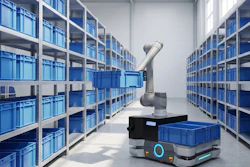
Polyfunctional robots are machines designed to perform multiple tasks based on the organization’s needs. Unlike traditional industrial robots, which are usually programmed for a defined process, these systems can be reprogrammed on-site through direct instruction or demonstration. In a factory or warehouse, one robot could move totes near outbound lanes during a busy shipping window, support production line replenishment when order flow slows and inspect a defined area before the next shift begins.
Unlike humanoid robots, which are defined by human-like form, the flexibility of polyfunctional robots matters because many facilities in use today were built around people. Existing warehouses often have narrow aisles, congestion that changes by shift and factory workstations, never designed for fixed robotic cells. Purpose-built automation can deliver strong results in certain settings, but it may require redesigning work around the machine. Polyfunctional robots create another path: automation that can fit into human-centric spaces and adjust as activity changes in brownfield conditions.
AI makes adaptability possible
AI is a big reason this possibility is gaining momentum. Enhanced perception enabled by multimodal sensor fusion is improving how robots interpret shelves, manipulate parts and work safely with nearby workers. Advanced cognition through generative AI foundation models such as vision-language-action (VLA) models is helping robots plan movement in variable environments and natural language interfaces to make instruction more intuitive, rather than relying on specialized programming skills. Integrating physical AI capabilities with polyfunctional robots will bridge the gap between digital intelligence and the physical world.
Consider a distribution center preparing for peak season. Associates repeatedly move empty totes from packing stations back to induction points, creating a steady drain on labor during the busiest hours. A current-generation robot may be able to take on that predictable movement while experienced workers handle damaged packaging or priority orders. As physical AI-enabled capabilities mature, the same robot could be taught a related task through demonstration, then refine performance using sensory data gathered during live work.
Start with the work itself
Wondering where to begin? The right starting point is the process, not the robot. Leaders should audit workflows that are predictable, physically taxing and difficult for staff. Match use cases to ideal automation types as there is a range of different types of robots within and outside the polyfunctional umbrella. Identify tasks suitable for polyfunctional robots where the need is beyond purpose-built robotics. For example, a tote-recycling process with part sequencing to lines between fixed areas may be a better first candidate than a complex picking workflow with high product variation. The goal is to find places where shifting among tasks creates value now, learn and train on high-quality physics-based data, and build experience for more adaptive use cases later.
Leaders should also study how people handle variability. An experienced associate may know when to reroute around congestion or pause a task because another team needs dock access. Capturing that operational knowledge helps define what a future robot must sense, decide and escalate.
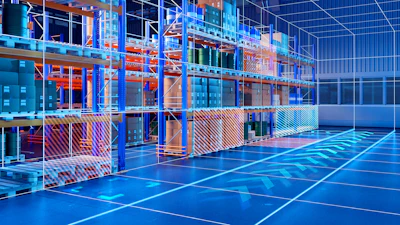
Preparation should include a structured proof-of-concept method. Before a robot enters the building, define the workflow, safety requirements and productivity target. Digital twins can help test assumptions before physical deployment. Workforce planning deserves equal attention. Polyfunctional robots will require supervisors and maintenance technicians who understand how robotic workflows should run. In many cases, the strongest candidates are already on the floor because they know where work breaks down.
From pilot projects to operational readiness
Polyfunctional robots will not resolve labor constraints overnight. Fully capable polyfunctional robots that can take on any operational task are still years away. Gartner analysis indicates the industry is at least six to eight years from achieving the dexterity and intelligence needed for robots to handle the full range of tasks, including broad self-learning. Although prepare for this to accelerate.
The business case also needs discipline. Hardware costs are falling, and robotics-as-a-service models can reduce upfront capital requirements. Yet leaders still need to account for maintenance, software updates and integration with manufacturing and warehouse systems. A robot that performs well in a controlled demo may slow down when it encounters damaged cartons, crowded aisles, a new part, or last-minute work order changes.
Their first meaningful gains will come from targeted deployments where AI-enabled perception, cognition and actuation reduce friction in daily operations. Leaders who begin mapping workflows, strengthening operational data and testing practical use cases now will be better positioned as the technology matures.
The factory and warehouse robotics story is moving past machines that simply repeat. The next chapter will be defined by machines that can learn enough to be useful across more than one job. That future is still developing, but the preparation window is already open.