Across industries, supply chain leaders are voicing familiar concerns:
- “We’re growing and have reached a volume where we can no longer operate manually.”
- “A significant portion of our workforce is retiring in the next few years—we need a plan.”
For more than a decade, organizations have invested heavily in automation to improve throughput, reduce labor dependency, and increase resiliency. Yet a critical gap remains. Many of the most labor-intensive, variable, and unpredictable tasks inside warehouses—piece picking, truck unloading, and case handling—are still overwhelmingly manual.
At the same time, labor shortages persist, wage pressures continue to rise, and fulfillment complexity shows no signs of slowing. Traditional automation has delivered efficiency, but often at the cost of flexibility. This leaves supply chain leaders facing a pivotal question: how do we automate highly variable work without sacrificing adaptability?
Enter mobile manipulators—a new class of robotic systems poised to reshape fulfillment operations.
A new kind of warehouse worker
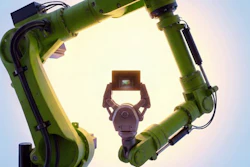
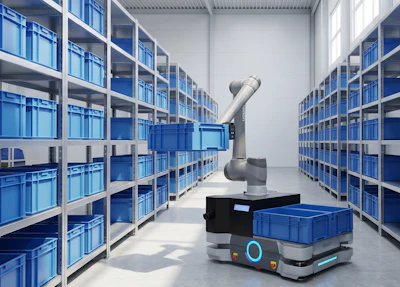
Mobile manipulators combine two familiar technologies: autonomous mobile robots (AMRs) and collaborative robot arms.
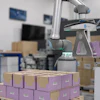
These systems can navigate dynamically through warehouse environments while physically interacting with their surroundings, picking items, placing cases, loading containers, and more. Enabled by advances in machine vision and motion planning, they can perceive unstructured environments and make real-time decisions.
In practical terms, mobile manipulators function much like human associates. They move to where work is needed, identify objects, and act on them. This combination of mobility and dexterity unlocks a new category of automation - one that is not fixed to a single station or constrained by rigid workflows.
Where mobile manipulators create value
The strongest use cases for mobile manipulators are workflows that require both movement and interaction - areas traditionally resistant to automation.
· Piece picking and order fulfillment
Robots can travel through pick zones, identify items, and build orders dynamically. This reduces reliance on fixed pick stations and provides flexibility to handle fluctuating demand, particularly during peak periods.
· Truck unloading and container handling
Unloading loose-loaded containers has long been one of the most physically demanding warehouse tasks. Mobile manipulators can enter trailers, identify cases, and unload them autonomously, improving both safety and consistency.
· Replenishment and internal transport
Instead of using separate systems for movement and handling, a single robot can transport goods and place them in the correct location, reducing handoffs and simplifying workflows.
· Mixed-case palletizing
Building pallets with diverse SKUs requires adaptability and precision—capabilities that are improving rapidly with advances in vision technology and robotic manipulation.
Bridging flexibility and automation
One of the compelling aspects of mobile manipulators is how they compare with traditional automation models.
Fixed systems such as conveyors and robotic cells deliver high efficiency but require significant upfront investment and operational rigidity. They are optimized for known, repeatable processes and can be difficult to adapt as businesses need to grow and evolve.
Mobile manipulators, by contrast, offer flexibility and scalability:
- They can be deployed incrementally, often starting with pilot programs.
- They can move between workflows as operational priorities shift.
- They can be reprogrammed as requirements change.
This makes them particularly attractive in environments with fluctuating demand or evolving processes. Rather than replacing existing automation, mobile manipulators often serve as a bridge, bringing automation into areas that were previously out of reach.
A balanced view: Challenges still remain
Despite their promise, mobile manipulators are not a silver bullet.
Meeting ROI targets can still be challenging. In highly complex or unpredictable environments, performance may lag behind skilled human workers, particularly in speed and fine dexterity. While costs are declining, the economics must be evaluated carefully within the context of each operation.
Successful deployment also requires more than simply inserting robots into existing workflows. In many cases, processes must be redesigned to fully leverage the technology. Organizations that approach mobile manipulators as part of a broader transformation strategy - rather than a standalone solution - are more likely to succeed. And this will take time and effort.
Integration is another critical factor. Connecting mobile manipulators with your WMS, control systems, and existing equipment requires thoughtful orchestration. Increasingly, the differentiator is not automation itself, but how well that automation is integrated and coordinated.
The humanoid question
Much of the public attention in robotics today is focused on humanoid systems - bipedal robots with human-like form factors. Since Tesla announced its Optimus robot in 2021, progress has been rapid and highly visible.
However, significant challenges remain before humanoids are viable in real warehouse environments.
Power consumption is one constraint. Current systems may operate for only a fraction of a standard warehouse shift on a single charge.
Safety standards are another. While mobile robots with wheels have established guidelines and industry alignment over multiple years, safety frameworks for humanoids are still emerging.
While humanoids may eventually play a role, their near-term impact on logistics operations will likely be limited.
More importantly, many of the underlying AI and perception technologies driving humanoid development will be applied to wheeled mobile manipulators. As a result, we can expect continued gains in capability without the added complexity of humanoid form factors.
𝗔𝘂𝘁𝗼𝗺𝗮𝘁𝗶𝗼𝗻 𝘁𝗵𝗮𝘁 𝘄𝗼𝗿𝗸𝘀 𝗳𝗼𝗿 𝘆𝗼𝘂𝗿 𝘄𝗼𝗿𝗸𝗳𝗼𝗿𝗰𝗲
One of the most persistent misconceptions about automation is that it replaces people. In practice, the opposite is often true.
Organizations that deploy mobile manipulators are typically using them to take on repetitive, physically demanding tasks, freeing employees to focus on higher-value activities such as quality improvement, exception management, and process optimization.
In this way, mobile manipulators act as a “helping hand,” augmenting the workforce rather than replacing it.
As technology matures, mobile manipulators will continue to improve in capability, reliability, and affordability. Their integration into warehouse ecosystems will deepen, enabling more seamless coordination with other systems and processes.
Over time, the most effective operations will not be fully automated or fully manual - they will be hybrid environments where humans and robots work side by side, each focused on what they do best.