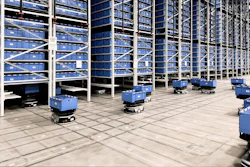
Today’s suppliers are under immense pressure to maintain margins in the face of tariff impacts, labor challenges, omnichannel complexity and more. But the next margin battle in retail is not being shaped by those pressures alone. It is also being shaped by a structural shift in the market: the largest retailers are raising the operating bar through automation, vertical integration of logistics and transportation, and technology-enabled supply chain execution.
As those larger players build more sophisticated fulfillment networks, expectations are moving upstream. Suppliers are now being asked to meet stricter shipment requirements around accuracy, traceability and proof. Retail compliance and chargebacks are not new, but the environment around them is changing. The margin risk is no longer limited to a missed routing guide or an isolated deduction. It is tied to whether suppliers can keep pace with increasingly automated, data-driven retail supply chains.
In this new environment, it is on the suppliers to ensure compliance with the retailer’s technology stack and fulfillment standards. This could be something specific like ensuring the cardboard thickness of a box complies with a retailer’s automation system to limit tears or prevent boxes from opening in transit.
At the same time, there are more channels than ever before. Suppliers are being asked to comply with a growing list of requirements across retailers, marketplaces, direct-to-consumer and other emerging channels. These requirements can include specific types of labels that must be applied, specific pallets that can be used, and what documentation must accompany each shipment. For suppliers, it can be incredibly challenging to keep pace and accurately comply with that level of complexity.
Where fulfillment complexity can lead to margin leakage
When suppliers don’t comply with routing guides, ship with a shortage or overage, have damaged goods or use a pallet type not compliant with the retailer, the retailer can penalize the supplier. Those penalties may be a percentage of gross merchandise value, a flat fee or another deduction, creating significant margin leakage.
The other issue is what happens downstream. If a supplier does not follow routing requirements, or if goods do not arrive on time in the required shipment format, the impact becomes an on-shelf availability problem. If SKUs that should be on the shelf are stuck in the warehouse, delayed at a distribution center or rejected for noncompliance, both the retailer and the supplier lose. This can be significant, as IHL Group reported in 2025 that retailers globally lose $1.73 trillion annually from out-of-stocks and overstocks.
The impact is real for both small and large retailers. For example, a large retailer may be waiting for a shipment from a supplier intended to serve more than 100 stores. If the supplier doesn’t get that right, a significant number of stores won’t have planned products, creating empty shelf space that could have been generating sales. For a smaller retailer, the impact can be even more concentrated. These shipment issues can also impact a retailer’s ability to sell during a key promotion window or high-demand period. Failures like this can damage the supplier and retailer relationship and ultimately influence how a retailer chooses to place future orders.
This is where the larger market shift becomes clear. Retailers are not simply asking suppliers to follow more rules. They are operating supply chains that are increasingly built around automation, data capture and precision. As that becomes the standard, suppliers that rely on manual processes or disconnected systems face growing margin pressure from both avoidable errors and the cost of proving what happened if a dispute arises.
The role of logistics providers in protecting margin
As retailer expectations rise, it is extremely important that logistics providers understand retail compliance requirements to help minimize the fines and chargebacks suppliers might receive. But the reality is, at times those fines are issued incorrectly. This makes it important for logistics providers to also have proof on the back end to properly dispute and remove incorrect fines. That proof can come from the WMS system showing exactly what was picked for an order, photos from different stages of the shipment, checklists confirming requirements were followed, and a full chain of custody showing how a pallet moved.
Suppliers tend to approach fines and chargebacks delicately, not wanting to damage the relationship with the retailer. That makes this kind of documentation important, as it allows the supplier to do so in a way that is grounded in evidence, not tension, and preserves the relationship. Additionally, pulling together documentation has historically been time consuming. But physical AI is changing that. When the same AI-native software orchestrates the robotics running the operation, the evidence — pick-level data on exactly what shipped, time-stamped images at each stage, and a complete digital chain of custody — is captured automatically as the work happens, rather than reconstructed afterward across disconnected systems. Valid shipments can be defended in real time, and avoidable margin loss is taken off the table.
Ultimately, the goal is higher order accuracy, stronger on-shelf availability, and better retailer relationships. The best logistics providers are not just moving products from Point A to Point B, they are helping suppliers ensure that when a retailer asks for something, the supply chain team is not the bottleneck. That becomes especially important as suppliers expand into new channels. If the sales team wants to launch on an online marketplace or a new retail program, the logistics operation must be able to support those requirements without slowing growth.
This is also where the operating model matters. Suppliers have historically had three options: build automation in-house with heavy capital expenditure, sign a multi-year contract with a legacy third-party logistics provider, or keep running manual operations and absorb the risk. A fourth path is taking shape — robotic automation, AI-native software, integrated transportation and flexible commercial terms delivered under one roof, with service levels written into the agreement rather than left to effort. When compliance, traceability and proof become properties of the system itself, protecting margin stops being a scramble and starts being the default.
The next margin battle in retail will not be won only through better pricing, lower freight rates or tighter labor management. It will be won in the fulfillment center, where accuracy, compliance, traceability and proof determine whether suppliers protect margin or lose it.
Retailer requirements will continue to evolve as the largest players use automation to raise expectations across the market. Suppliers that continue to rely on manual operations and individual expertise will continue to face the same challenges. Those that automate compliance tasks, invest in stronger technology foundations, and partner with a fulfillment platform that prevents noncompliance in the first place (and can document and defend any disputes that may still arise) will be better prepared for what comes next.
Fulfillment is becoming a proof-driven function because retail itself is becoming more automated, more consolidated and less tolerant of operational variability. The competitive advantage will belong to suppliers that can access modern fulfillment infrastructure without having to build it themselves, and to logistics partners that can help them move goods efficiently, meet and evolve with retailer expectations and prove they did it right.