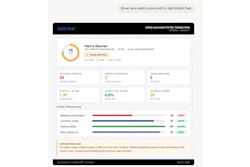
Arrive AI released Arrive OS, the software platform powering Arrive Points and connecting them through the Arrive Point Network, Arrive AI's intelligent logistics coordination platform.
Arrive OS transforms autonomous delivery from isolated pilot programs into scalable, commercially deployable logistics networks.
The platform enables Arrive Points to continuously gain new capabilities through software updates rather than requiring hardware replacement, allowing Arrive AI to expand functionality, support new delivery workflows, and evolve customer capabilities over time.
"Arrive OS turns the Arrive Point from fixed-function hardware into an intelligent platform we can continuously improve and expand over the air," says Rick Thomas, head of product and platform at Arrive AI. "We believe this changes the economics of autonomous logistics infrastructure by allowing networks to scale, adapt, and improve through software rather than relying on constant hardware replacement cycles."
Key takeaways:
· This software-first approach strengthens its ability to pursue larger enterprise opportunities across healthcare, logistics, retail, and smart infrastructure sectors while increasing the long-term value of deployed infrastructure.
· Arrive OS was designed to transform autonomous delivery from isolated deployments into intelligent, interconnected logistics networks.
For example, in the same way Uber uses predictive routing and scheduling, a robot could pick
· This dynamic orchestration model creates what is described as a "private network effect" inside enterprise logistics environments. As additional Arrive Points, autonomous systems, and workflows are connected through Arrive OS, the network becomes increasingly intelligent, efficient, and operationally valuable.
· The operating system creates a durable software foundation capable of supporting future AI-enabled workflows, autonomous technologies, and enterprise integrations as the network expands.