Manufacturers across the country are investing heavily in automation, AI, and digital transformation to improve efficiency and drive innovation. But while much of the industry’s focus remains fixed on technology, many organizations are overlooking one of the most important drivers of long-term operational success: the leadership potential already sitting on the factory floor.
For years, manufacturers have approached frontline workers primarily through the lens of labor and productivity. Operators were expected to execute tasks, maintain output, and keep production moving. Meanwhile, leadership development was often reserved for office-based employees, engineers, or management-track hires.
That mindset no longer reflects the realities of modern manufacturing.
Frontline workers already possess critical leadership skills
Today’s frontline workers are doing far more than repetitive manual labor. They are constantly solving problems in real time, navigating operational disruptions, coordinating across teams, balancing safety and production demands, and making judgment calls that directly impact quality, uptime, and efficiency. In many ways, operators are already demonstrating the foundational behaviors organizations look for in effective leaders, even if companies are not formally recognizing them as such.
A technician diagnosing a machine issue under production pressure is demonstrating critical thinking and decision-making. A line lead coordinating a difficult shift handoff is practicing communication and team management. An operator identifying a quality concern before defective products leave the facility is showing accountability and operational awareness.
These are not simply technical skills. They are leadership skills.
Yet across manufacturing environments, these critical skills often remain invisible because they are not measured and instead, organizations frequently continue promoting based primarily on tenure or technical expertise alone, without intentionally developing the broader human skills required to lead increasingly complex operations.
That gap is becoming harder to ignore as the role of the frontline worker continues to evolve.
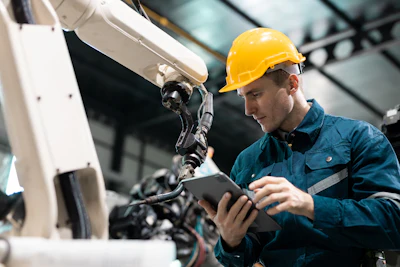
As automation, robotics, and AI become more embedded across manufacturing environments, human workers are shifting away from purely manual execution and toward oversight, coordination, exception handling, and operational decision-making. The future factory will not eliminate the need for frontline employees. Instead, it will demand workers who can think critically, adapt quickly, communicate effectively, and supervise increasingly autonomous systems.
Why traditional training models fall short
The challenge is that many manufacturers are still relying on development models that were never designed for frontline teams in the first place.
Traditional training programs often assume employees can sit through lengthy classroom sessions or complete extended online coursework during the workday. That model may work for desk-based employees, but it rarely aligns with the realities of manufacturing environments.
Frontline workers operate on production schedules, rotating shifts, and tightly managed workflows. They move continuously between machines, stations, and operational tasks. Pulling someone off the line for an hour-long leadership seminar is often unrealistic, particularly in facilities already facing staffing shortages or productivity pressures.
As a result, many frontline employees receive only mandatory compliance or safety training, while broader leadership development remains largely inaccessible.
The consequences extend beyond learning and development. When employees do not see opportunities for advancement, engagement suffers, retention becomes harder, and organizations lose valuable institutional knowledge. In an industry already facing ongoing labor shortages and an aging workforce, failing to invest in internal leadership pipelines creates long-term operational risk.
Bridging the gap between operator and leader
Manufacturers need a different approach, one that aligns development with how frontline workers actually learn and work.
Effective frontline learning must fit into the flow of the workday rather than interrupt it. That means shifting toward shorter, more accessible learning experiences that can be applied immediately in real operational situations.
Leadership development for frontline teams should be practical, contextual, and embedded directly into everyday work. A worker preparing to lead a shift handoff for the first time may need quick guidance on communicating production updates clearly. A technician stepping into a temporary supervisory role may need support navigating team conflict or prioritizing competing operational demands. These moments create opportunities for meaningful skill development when learning is delivered in the right format and at the right time.
Accessibility matters just as much as relevance. Frontline employees are not sitting behind desks throughout the day, so learning must be available through the devices and systems already integrated into manufacturing environments — whether through tablets, kiosks, mobile devices, or embedded workflow tools.
Organizations also need to rethink how they identify leadership potential in the first place. Leadership capability is often easier to recognize in office settings, where presentations, meetings, and management visibility naturally create opportunities for exposure. On the factory floor, however, leadership often shows up in quieter but equally important ways: helping resolve operational bottlenecks, mentoring newer workers, stepping in during production disruptions, or maintaining team coordination under pressure.
These moments may not always appear on performance reviews, but they are often the clearest indicators of future leadership readiness.
Building the next generation of leaders
The manufacturers that will succeed over the next decade will not simply be the ones investing in the most advanced technologies. They will be the ones building resilient workforces capable of adapting alongside those technologies. That requires recognizing that leadership potential does not only sit in conference rooms or corporate offices. Often, it is already standing on the factory floor.