The evolution toward human-centered manufacturing begins with a simple but important realization: people and machines excel at different things. Rather than asking how technology can replace human effort, it’s time to determine how technology can drive human capability. The goal is no longer simply greater automation, but greater collaboration between people and intelligent systems.
Like a train traveling along a set of tracks, machines are exceptionally effective when the route is clearly defined and conditions remain consistent. Intelligent technologies can execute repetitive tasks with remarkable speed, consistency and precision. Technology can also process vast amounts of data and follow programmed instructions without deviation, performing the same operation thousands of times with identical results.
Manufacturing, however, rarely operates in perfectly controlled conditions. Production schedules shift. Supply chain disruptions occur. Product specifications evolve. Equipment fails unexpectedly. Customer priorities change. These variables require people to make decisions in real time, adjusting workflows, reallocating resources, troubleshooting problems and identifying opportunities for improvement. This is where human expertise becomes indispensable.
Unlike machines, people can assess context, recognize subtle patterns, weigh competing priorities and change direction when circumstances demand it, ultimately keeping a workflow moving even when an issue occurs. Human judgment provides the flexibility that allows organizations to adapt while still achieving operational goals.
Empowering the workforce behind the machines
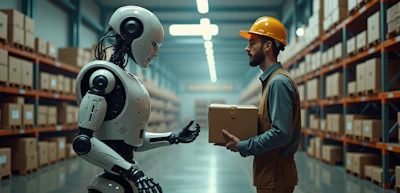
Rather than competing with one another, people and technology should be viewed as complementary and collaborative strengths within the same production system. Machines bring consistency and computational power while humans contribute creativity, dexterity, critical thinking, and situational awareness. Together, they create manufacturing environments capable of handling both the predictable and the unpredictable.
As manufacturing processes become increasingly complex, variability becomes constant and the volume of operational data exceeds what any individual can reasonably process. Intelligent systems can rapidly analyze information and surface insights while experienced employees apply judgment to determine the best course of action. The result is faster, more informed decision-making than either humans or machines could achieve independently.
This human-first approach is especially important from an environmental health and safety perspective. Machines are designed to execute processes, not to understand the physical well-being of the people working around them. An industrial robot will continue performing its programmed task unless safeguards are built into the system. It is the responsibility of engineers, environmental health and safety professionals, and operational leaders to design environments where automation and people can work safely together.
Equally important is protecting workers from the less visible consequences of poorly designed automation. Workstations that ignore human ergonomics, for example, can contribute to musculoskeletal injuries, fatigue, repetitive stress and reduced productivity over time. Likewise, systems that overwhelm employees with alerts, dashboards or unnecessary complexity can create cognitive overload that increases the likelihood of errors. A human-centered manufacturing model addresses both physical and mental interactions with technology, recognizing that operational excellence depends on supporting the whole worker rather than simply optimizing the production process.
Common implementation mistakes to avoid
One of the most common mistakes manufacturers make is assuming that automation is the answer to every operational challenge. While automation can improve efficiency, consistency, and productivity, it is not inherently the right solution for every process or every organization. Successful digital transformation begins by understanding the business problem, not by selecting the technology first. Organizations that become overly focused on implementing the latest automation tools risk losing sight of what matters most: improving business performance, supporting and retaining employees, and delivering value to customers.
When technology initiatives are disconnected from broader business objectives, small implementation missteps can compound over time, creating a snowball effect that impacts quality, productivity, employee adoption, and ultimately profitability. The goal should never be to automate for automation's sake, but to ensure every technology investment directly supports the organization's strategic priorities.
Additionally, automation cannot repair a process that is fundamentally broken. If an inefficient or inconsistent process is automated without first addressing its underlying issues, those problems simply become more consistent and more difficult to correct. In some cases, automation can even magnify existing problems by embedding them into every production cycle. Before automating any operation, manufacturers should first evaluate whether the process itself is capable, repeatable, and aligned with the desired outcome.
Technology is also only as effective as the data and people that support it. Artificial intelligence and advanced analytics depend on accurate, consistent, and reliable data. If poor-quality or incomplete data is used to train AI models, the resulting insights and recommendations may be inaccurate, ultimately leading organizations to make poor operational decisions with greater confidence.
Likewise, implementing advanced technologies without adequately preparing employees often results in underutilized systems, inconsistent adoption, and disappointing returns on investment. Establishing specific, measurable, achievable, relevant, and time-bound (SMART) goals provides a framework for evaluating success while ensuring technology investments remain aligned with business priorities. When organizations combine well-designed processes, high-quality data, engaged employees, and clearly defined objectives, automation becomes a powerful enabler of operational excellence rather than a source of unnecessary complexity.
The human element is indispensable
As manufacturing continues its digital transformation, one truth remains unchanged: technology is only as effective as the people who design, manage, and continuously improve it. Throughout manufacturing history, many of the industry's most meaningful process improvements have not originated from machines but have come from the ingenuity of frontline workers who identified a workaround, challenged conventional thinking or improvised a solution when conditions changed. These moments of innovation cannot be programmed into an algorithm – they are the product of human experience, curiosity, and creativity.
Human judgment also extends beyond operational performance to encompass ethics, responsibility, and safety. Manufacturing leaders are regularly faced with decisions that require balancing productivity with employee well-being, production targets with product quality, and operational efficiency with regulatory compliance. While intelligent systems can provide data and recommendations, they cannot weigh the ethical implications of a decision or determine when protecting people should take precedence over maintaining output. Those decisions require human values, empathy, and accountability.
The new blueprint for workforce development
Designing the industry's next era requires a shift in perspective. Success should not be measured solely by the number of robots deployed or the amount of automation implemented, but by how effectively technology empowers people to perform at their highest potential. Organizations that maximize human effectiveness through thoughtful technology integration will achieve more than operational efficiency – they will build stronger workforces, foster greater innovation, improve quality and safety, and create sustainable competitive advantages that translate directly to long-term profitability.
The manufacturers that will define the next generation of industrial leadership are those that recognize a simple but powerful principle: the greatest gains in productivity do not come from replacing human capability, but from elevating it. When organizations intentionally design manufacturing around the strengths of both people and technology, they unlock a level of operational excellence that neither could achieve alone. The future of manufacturing belongs to those who understand that human-centered innovation is not a departure from automation but is the key to realizing its full potential.