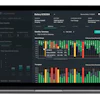
Worldly expanded its Product Impact Calculator, which quickly measures a product’s carbon footprint and calculates corporate-level Scope 3 emissions, helping businesses prepare for global regulatory reporting requirements.
“Scope 3 used to be a guessing game. With this expansion, brands no longer have to choose between speed and accuracy, they can have both,” says Scott Raskin, CEO of Worldly. “The Product Impact Calculator gives companies the clarity they need to design better products, run smarter supply chains, report more accurately, and move forward strategically and responsibly.”
Key takeaways:
· With the expansion, the Product Impact Calculator now covers products in more than 260 product categories across consumer goods industries, including sporting goods, home goods, furniture, hard goods, apparel, and footwear, making it easier for multi-category brands and retailers to measure and reduce product-level Scope 3 emissions using primary data, not estimates. By connecting materials, suppliers, and finished products in one system, organizations can identify emissions hotspots, model decarbonization scenarios, and prioritize actions with confidence.
· Unlike other product carbon footprint tools, the solution seamlessly integrates primary data on materials and suppliers at scale, delivering more precise and actionable calculations compared to spend-based approaches, and a more efficient and scalable option than resource-intensive life cycle assessments.
· Initially covering 40 apparel product categories, the Product Impact Calculator can now be used to model Scope 3 emissions for more than 400,000 products.
· The latest Product Impact Calculator update offers an even more detailed view of a product’s full life cycle, including:
Category-specific packaging — recognizing, for example, that a bike or sofa requires bulkier, sturdier packaging than a set of golf balls.
Assembly impacts — capturing differences in manufacturing complexity across product types.
Real-world use-phase behavior — such as how often a product is washed, charged, or maintained by the customer.