Not only are jobs in the supply chain, logistics, and warehousing industries often labor-intensive, they are also among the highest for serious injury rates from overexertion with back strain identified as the most common and costly. With the rise in automation, leaders can’t afford to leave workers behind in the wake of change.
When leaders implement thoughtful and strategic solutions that keep their workers safe from injury, they are ultimately sending a message to workers that they are valued. This is increasingly important as recent findings show that one in five workers don't have a good understanding of musculoskeletal disorders (MSDs) or how certain tasks on the job can contribute to MSD risk. Of these workers, less than 60% say they consistently have access to adequate ergonomic tools and equipment.
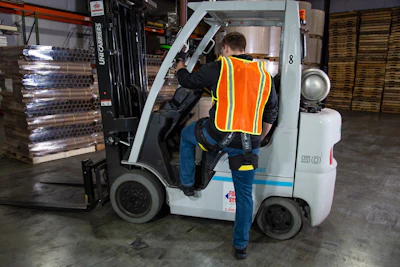
Occupational exoskeletons are a leading example of wearable technology that can prevent MSDs and back strain, demonstrating measurable reductions in fatigue and discomfort that translate to improved injury rates and worker productivity. Flexible, textile-based exosuits can be worn by workers in labor-intensive roles and are especially helpful for tasks involving repetitive bending and lifting such as pallet picking, loading trucks, and general materials handling—tasks that commonly strain the back muscles.
Exosuits assist workers with elastic bands that function like an extra set of back muscles, helping reduce back strain and injury. If workers experience back strain injuries, it can be incredibly costly to lose a team member for even a short amount of time. Team morale and productivity can plummet, and businesses can see thousands of dollars of direct and indirect costs.
When workforce leaders identify problems and decide to implement new safety technologies to mitigate risk, there are steps to increase higher adoption and acceptance rates among workers.
- Identify the “why?”
At the beginning of a safety technology inquiry and deployment, preliminary risk assessments and worker surveys can help identify how much time workers are spending on certain tasks, which tasks might cause the most discomfort or injuries, and who would benefit from a new safety solution. Gathering data on injuries, productivity, and worker attitudes can allow leaders to pinpoint use cases and areas they should target to successfully introduce exosuits and other safety technologies.
After initial inquiries and reviewing data, identify one or two locations that see high worker injury rates or low productivity, and set expectations to best implement a pilot program before comprehensive deployment. Smaller scale (for example, 50 users instead of 100) deployments can serve as a guide and learning opportunity to help reach goals and identify any stopgaps for success. This is a great opportunity to ask teams the difficult questions to determine what’s working and what isn’t.
2. Demonstrate value to workers
If workers see their leaders advocating for them, it can lead to increased worker satisfaction and trust alongside an improved retention rate. Acting on the learnings from the risk assessment can show workers that their leaders care and have thoughtfully crafted this new approach toward keeping them safe.
Exosuits and other wearable technology can be valuable resources for improving workers’ quality of life. This can be done by adequately educating and supporting workers about new technologies that can help them. It's important to explain how consistently and accurately using assistive safety devices can drastically improve their fatigue and improve how they feel after a full shift when going home at the end of a workday. Explaining “what’s in it for them” can help connect the investment and gesture to the task at hand: Leaders are showing they understand and value their workers’ daily tasks and are providing a solution to support their health.
Studies have shown that when using exosuits, productivity increased and discomfort decreased, alongside a clear return on investment. One distribution center in the study saw an 8% increase in productivity, which, when applied to general ROI calculations, resulted in a full return on investment in six months, and 13 times on the initial investment. While workers reap the physical benefits of technology like exosuits, the financial return can be significant and help leaders make a business case.
3. Lead by example
Leaders and supervisors should be actively engaged and informed during the initial rollout. When leaders stay close to the implementation it signals that the program matters and builds trust. That visible engagement strengthens accountability, reinforces roles and follow-through, and boosts acceptance and adoption, which are all critical ingredients for long-term results. Exosuits are a strong example: Successful implementation takes a coordinated team (leaders, supervisors, safety, and frontline champions) to manage the pilot, support users day to day, and capture the data and insights needed to refine the program before scaling. When leadership understands what’s happening on the floor and removes barriers quickly, workers get their questions answered, concerns addressed, and the support needed for the technology to become a natural, effective part of the workday.
4. Follow the numbers
Identify ways to accurately follow device usage, worker attitudes, injury rates, and productivity boosts in order to quantify not only the investment, but the impact on worker well-being. Satisfied and healthy workers can produce higher-quality work, which can impact overall job satisfaction and turnover rates. Recording the number of injuries, strains, sprains, and attitudes allows leaders to assess a safety program’s effectiveness to determine full deployment and potential mandates.
Continuing safety education at the executive and supervisor level can be a goldmine for warehousing and logistics industries. You can’t put a price on a worker’s health and well-being, but you can invest in technology to help improve it. Exosuits and other wearable safety devices can be an immensely valuable tool for advancing worker wellbeing and prioritizing safety when correctly deployed.