Warehouses have long been the beating heart of supply chains, yet today, they are also a pressure point. Around the globe, a clear trend emerges: warehouses are increasingly being built on the outskirts of cities where land is more affordable but resources — including public transportation and labor — are scarce. As a result, companies often need to bus workers to these remote locations, adding logistical complexity and costs. This dynamic has contributed to persistent labor shortages that continue to test retailers and third-party logistics providers (3PLs), especially during peak demand cycles when staffing needs surge. At the same time, worker safety remains a critical concern, as warehouses are among the most injury-prone environments in the United States.
To address both labor availability and workplace risks, many organizations are turning to automation. Far from replacing human workers, automation technologies are increasingly serving as collaborative partners that help fill labor gaps, streamline operations, and remove employees from high-risk, repetitive tasks. By reframing automation as a tool for workforce enablement, retailers and 3PLs can navigate labor challenges more strategically while creating safer, more sustainable workplaces.
The state of labor in warehousing
The labor market for warehousing and logistics has been tight for years, and the challenge shows no signs of easing. According to the U.S. Bureau of Labor Statistics, the warehousing and storage industry employed more than 1.8 million people in 2024, yet turnover rates remain among the highest of any sector. The work is physically demanding, schedules are unpredictable, and competition is fierce.
Seasonal hiring adds another layer of difficulty. Retailers and 3PLs ramp up operations during the holiday season, but finding qualified temporary workers has become increasingly difficult. As mentioned above, many warehouse employees must be bused in from other areas to cover the labor gap. Furthermore, it costs companies more since they are also competing with a limited regional labor pool for resources. In many cases, there is a concentration of warehouses in the same area, which intensifies competition for workers and strains local infrastructure. The U.S. Chamber of Commerce recently reported that for every 100 job openings in transportation, warehousing, and utilities, there are fewer than 70 available workers. This imbalance leaves warehouses scrambling to cover shifts, often leading to overtime, fatigue, and increased safety risks.
Worker safety at the forefront
Beyond labor availability, safety remains a persistent concern. Warehouses are dynamic environments with heavy equipment, moving vehicles, and fast-paced picking and packing operations. According to the Occupational Safety and Health Administration (OSHA), warehousing injury rates are nearly double the average across private industry. Common causes include overexertion from lifting, repetitive motion injuries, and accidents involving forklifts and other machinery. These injuries have both human and financial costs. The National Safety Council estimates that the average workplace injury costs employers over $40,000, factoring in medical expenses, lost productivity, and workers’ compensation. In a tight labor market, losing skilled employees to preventable injuries creates an additional strain on already thin resources.
The role of automation in labor efficiency
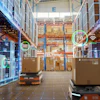
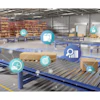
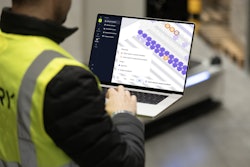
Warehouse automation offers a path forward by addressing the gaps in both staffing and efficiency. Automation can reduce reliance on seasonal and temporary labor while improving throughput and accuracy. Technologies such as autonomous mobile robots (AMRs) assist with transporting goods across large facilities, freeing workers from time-consuming travel and reducing fatigue associated with excessive walking and pushing heavy carts. Automated storage and retrieval systems (AS/RS) streamline picking and inventory management, while AI-powered scheduling systems ensure labor is allocated where it is most needed. Additionally, modern automation platforms feature intuitive user interfaces with built-in language translation and simplified workflows that eliminate the need for handheld devices. This ease of training accelerates onboarding, reduces training time and costs, and ultimately increases overall productivity and operational efficiency.
Importantly, these technologies do not eliminate the need for human workers. Instead, they shift the nature of warehouse work: employees can focus on higher-value tasks such as quality control, exception handling, customer-focused problem-solving, and roles that are less physically taxing and more rewarding. This augmentation model not only alleviates pressure on staffing but also improves retention by making warehouse jobs safer and more engaging.
Automation’s impact on safety
One of the most promising benefits of automation lies in its ability to improve safety outcomes. For instance, collaborative robots and automated palletizers reduce the risk of musculoskeletal injuries by handling heavy or repetitive lifting. AMRs lower the likelihood of collisions in high-traffic areas by autonomous navigation using AI, vision and sensors to avoid obstacles. Advanced vision systems can detect unsafe conditions, such as items blocking pathways.
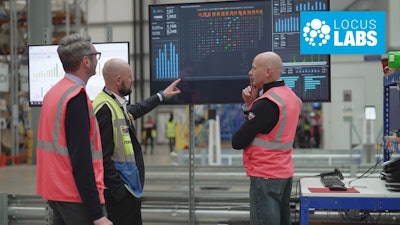
Even more forward-looking, predictive analytics tools tied to automation systems can anticipate when equipment is likely to fail, preventing accidents before they occur. With this capability, companies can proactively fix bots before they break, saving time otherwise spent reporting and reacting to issues. This not only increases the uptime and reliability of automated systems but also enhances overall operational continuity. By shifting workers away from hazardous tasks and leveraging data to prevent incidents, automation directly supports a safer workplace.
Navigating implementation challenges
Of course, adopting warehouse automation is not without its hurdles. Upfront investment can be significant, and integration with legacy systems often requires careful planning. There are also cultural challenges: employees may fear that automation threatens their jobs, or they may lack the skills needed to operate new technologies. To overcome these barriers, successful organizations invest as much in people as in machines.
Training programs, clear communication, and inclusive change management are essential. When workers understand that automation is designed to support them, not replace them, adoption is smoother and morale improves. Upskilling initiatives also ensure that employees can transition into new roles created by automation, strengthening workforce resilience long-term.
The future of warehousing will be defined by a partnership between human workers and automated systems. As labor shortages persist and safety concerns remain top of mind, automation offers a way to ease staffing pressures, improve efficiency, and protect employees from harm.
For retailers and 3PLs, the opportunity lies in embracing automation not as a replacement strategy but as an enablement strategy, one that reimagines the warehouse as a safer, smarter, and more sustainable workplace. Beyond internal benefits, automation also serves as a key differentiator for the services that companies provide to their customers, creating a safer, more sustainable, and more efficient operating environment. By aligning automation with workforce development and safety goals, supply chain leaders can build operations that are both resilient and adaptable in the face of ongoing labor challenges.