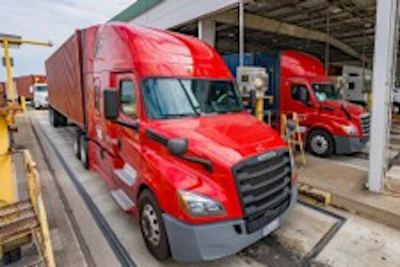
The Ports of Long Beach and Los Angeles drafted guidelines for a newly proposed, three-year Zero-Emission Truck Rewards Incentive Program (ZE-TRIP) to accelerate the transition to zero-emission trucking, offering qualifying trucks incentives of $60 per terminal visit and up to $36,000 per vehicle annually.
The proposed program executes measures promised through an agreement last month with the South Coast Air Quality Management District. The program is designed to make zero-emission trucks more cost-competitive, encourage greater utilization of the zero-emission trucks that exist today and help attract more zero-emission trucks to the market to serve the ports.
“We know cost is one of the biggest barriers for our trucking partners to transition to zero emissions,” says Port of Long Beach CEO Dr. Noel Hacegaba. “This incentive program is another tool in our decarbonization playbook, helping offset the higher costs of owning and operating zero-emission trucks based on direct feedback from truckers about what they need. Closely collaborating with our supply chain partners has been critical to the environmental progress we have made already and it’s going to be even more important as we chase our zero-carbon goal.”
“Accelerating the transition to zero-emission trucking requires both ambition and practical solutions,” says Port of Los Angeles executive director Gene Seroka. “ZE-TRIP puts real resources behind that effort by rewarding the use of zero-emission trucks today while helping build the market for more of them in the future. Working together with our trucking community and supply chain partners, we can continue driving toward a cleaner, more sustainable port complex while keeping cargo moving efficiently and competitively.”
Key takeaways:
· Updated in 2017, the Clean Air Action Plan is a comprehensive strategy for accelerating progress toward a zero-emissions future while protecting and strengthening the ports’ competitive position in the global economy.
· Since 2005, port-related air pollution emissions in San Pedro Bay have dropped 90% for diesel particulate matter, 70% for nitrogen oxides, and 98% for sulfur oxides.
· The document calls for the ports to reduce GHGs 40% below 1990 levels by 2030 and 80% below 1990 levels by 2050.