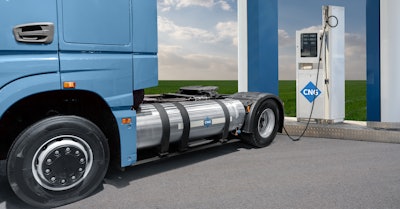
Compressed natural gas (CNG) isn't only an alternative fuel for environmentally conscious businesses. It's also a powerful challenger to traditional diesel engines, offering clear advantages in cost, sustainability and performance.
For members of the commercial fleet industry tasked with maintaining visibility into their fuel strategy and balancing costs along with efficiency and environmental concerns, the evolution of CNG technology can be a game-changer, especially through trial-based approaches that simplify the decision-making process for teams and offer real-world data to inform long-term planning.
Understanding CNG technology
To appreciate the advancements made in CNG engines, it’s important to first understand how they operate. CNG vehicles work similarly to traditional internal combustion engines found in gasoline or diesel vehicles. The key difference lies in the fuel delivery system:
- Fuel storage: Natural gas is stored in high-pressure tanks located on the vehicle, typically behind the cab.
- Pressure regulation: Fuel moves through a pressure regulator that reduces the gas pressure to levels suitable for the engine.
- Fuel injection and combustion: The gas is injected into the engine, mixed with air, compressed, and ignited with a spark plug.
Advantages of next-generation CNG engines
Through a trial with a CNG vehicle, you’re likely to experience the latest advancements in CNG technology that have addressed previous concerns about power, range and infrastructure, making it a viable choice for fleet operators. The benefits of next-generation CNG engines include:
1. Cost efficiency
CNG typically costs less than diesel or gasoline, and thanks in part to its stability as a domestically produced fuel, CNG prices are less prone to global market fluctuations. Over the last 10 years, CNG prices have averaged 30% lower than gasoline and 33% lower than diesel fuel. Additionally, CNG engines burn cleaner than diesel and experience less wear and tear, which can translate to lower maintenance expenses over time, and these engines don’t need advanced and expensive exhaust after treatments systems, nor do they need diesel exhaust fluid.
2. Environmental benefits
CNG engines emit significantly fewer greenhouse gases and pollutants, including nitrogen oxides (NOx) and particulate matter, compared to diesel engines. For fleet managers aiming to meet corporate sustainability goals, CNG can reduce Scope 3 emissions by up to 90%.
3. Enhanced performance and reliability
Historically, critics of CNG engines pointed to lower torque and power compared to diesel, but recent innovations have changed that narrative, with CNG vehicles seeing 400-500 horsepower today, and up to 1,850 pounds per feet of torque. Today's CNG engines match diesel engines in both power and reliability, making them suitable for heavy-duty applications like delivery vehicles. Plus, they have an 800-mile range while hauling heavy loads. Another benefit? They’re quieter. CNG engines operate with significantly less noise than their diesel counterparts, offering a more pleasant driving experience and creating less noise pollution in urban environments.
Explore smarter fuel today
The proof of CNG’s capabilities lies in its adoption by fleets across the globe. CNG adoption can lead to both financial and environmental success. But to understand the real value in switching to CNG is to pursue the opportunity of trialing a CNG-powered vehicle for your fleet. Select energy companies offer CNG demo programs that allow participants to get behind the wheel of a CNG-powered 15-liter truck to not only evaluate things like overall performance, torque and load capacity, but to generate actionable data related to:
- The refueling experience
- Highway efficiency
- Cost projections
- Emissions reductions
Trials can last from two weeks to 30 days, so work with your demo provider to understand the ideal length of time for your team to test the key performance and experiential requirements to meet your fleet's needs. It’s important that enough data is gathered that can be directly compared to your diesel fleet averages.
Why CNG deserves a closer look from fleet managers
Fleet managers must stay ahead in a rapidly changing industry. CNG provides a forward-looking solution that balances economics and environmental responsibility. By reducing fuel costs, streamlining maintenance and contributing to sustainability goals, CNG engines pave the way for smarter fleet operations.
For fleet operators hesitant about making the leap, the good news is that the transition to CNG isn't all-or-nothing. Start with a demo and trial, then slowly convert a percentage of your fleet to evaluate the performance and savings firsthand.
To explore how CNG can benefit your operations, consider leveraging the services of energy innovators who offer the expertise and tools needed for a seamless transition to a new fueling experience.