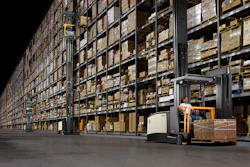
Compliance is at the heart of strong supply chain operations. As businesses face rising trade volatility – driven by evolving tariffs, shifting VAT rules, and fragmented customs requirements – they are now contending with another layer of pressure: sustainability mandates. Whether through Carbon Border Adjustment Mechanisms (CBAM) or ESG-driven supply chain transparency rules, environmental regulation is now directly embedded into cross-border commerce. As a result, sustainability is reshaping how global trade compliance works.
Supply chain volatility requires new operational processes
Today’s supply chains are operating in an environment defined by complexity. In fact, recent Avalara research found that 83% of business leaders say cross-border operations are more complex now than a year ago. As uncertainty becomes the norm, the convergence of global trade and sustainability mandates creates new financial and operational risks. Compliance failures can trigger shipment delays, unexpected duties, penalties, and reputational exposure. Regulatory missteps also increase costs and can expand a company’s environmental footprint.
Sustainability mandates are now being layered onto cross-border commerce. For organizations that operate globally, environmental compliance is directly tied to import and export activities, supplier qualification, and market access, adding pressure to already fragile supply chains and forcing companies to rethink planning and sourcing models.
Sustainability is becoming trade policy
Environmental regulation is no longer adjacent to trade compliance. It is now embedded in customs and cross-border operations. While some businesses still rely on paper-based processes, disjointed spreadsheets, and fragmented supplier reporting, these approaches are increasingly insufficient in today’s regulatory environment. Modern trade compliance demands better traceability and transparency across supplier ecosystems.
As ESG and supplier transparency mandates continue to be implemented globally, organizations must be prepared to expand their compliance processes to ensure they can meet increasingly granular reporting and documentation requirements. These requirements often include customs documentation, supplier onboarding, product sourcing, duty calculations, and more. As Europe advances implementation of CBAM, there is a stronger emphasis on monitoring upstream supplier emissions more closely and integrating decarbonization into sourcing decisions.
Fragmented supply chains magnify regulatory risk
Sustainability regulations vary across countries and regions, leaving organizations navigating inconsistent reporting methodologies, carbon accounting standards, documentation requirements, and enforcement timelines. Companies cannot assume new markets will have familiar regulatory frameworks, as this assumption can increase business risks.
With nearly half (49%) of organizations surveyed by Avalara citing regulatory change after market entry as their biggest cross-border risk, putting processes in place to manage trade volatility and maintain cost control is critical for global operations.
Compliance is strategic, not just functional
Compliance is becoming more strategic across the business. Compliance was once viewed primarily as a back-office or legal function, but with increasing complexity, compliance directly impacts expansion strategy, customer experience, and margin protection, along with operational continuity.
Organizations that do not take sustainability compliance seriously within supply chain operations risk more than administrative inefficiencies. Shipment delays, product rerouting, heightened waste, and higher emissions all carry financial consequences. On average, Avalara found that businesses are spending 11% of their cross-border revenue on customs, taxes, and regulatory management. Compliance failures are no longer isolated finance issues; they can ripple across procurement, logistics, sustainability, and customer operations.
Supply chain resilience starts with technology
Given the growing complexity of global trade and sustainability requirements, organizations must find ways to maintain operational continuity while meeting compliance expectations. The answer is clear: organizations are increasingly turning to technology to create predictability where regulatory certainty is lacking. In fact, 87% of businesses are already using AI in cross-border operations.
AI-enabled tools and automation, centralized data platforms, real-time regulatory monitoring, and integrated sustainability reporting tools are becoming essential components of modern trade compliance strategies. Technology is shifting from an efficiency enhancement to a business requirement for global trade management.
Building a more sustainable global supply chain
Whether organizations are just beginning their sustainability compliance journey or refining existing processes, a few foundational steps can help prepare for what lies ahead.
First, break down silos across tax, trade, procurement, sustainability, and logistics teams.
Second, invest in a centralized compliance infrastructure to improve consistency and visibility.
And third, anticipate continued evolution of sustainability trade rules and factor them into forward planning.
Sustainability-related trade requirements will continue to expand across global markets and trade policies. To avoid falling behind, organizations must prioritize modern trade compliance operations before scaling internationally. The businesses that will win globally are the ones that embed sustainability compliance into how they move goods, manage suppliers, and calculate duties. In a world where a missed CBAM reporting obligation can trigger audit exposure and a tariff change can reshape a sourcing model overnight, compliance becomes a competitive advantage.