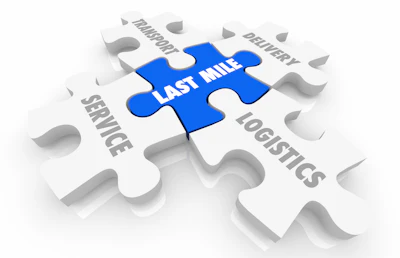
Amidst rising costs, fluctuating supply and demand, and an ongoing labor shortage, foodservice companies are under intense pressure to meet customers’ demanding delivery expectations without sacrificing the bottom line. It’s an uphill battle at the best of times but toss any number of disruptions into the daily mix — road works, last-minute orders, bad weather, traffic congestion, access constraints, vehicle breakdown, overages, shortages and damages (OS&D) — and last-mile performance suffers, along with customer satisfaction, brand loyalty, and profitability.
Amidst this challenging last-mile landscape, further complicated by the complexity of transporting time- and temperature-sensitive goods, the ability to balance fixed delivery commitments with the dynamic nature of customer demands has become a critical service differentiator. As a result, forward-thinking foodservice companies are rethinking distribution strategies, reprioritizing the role of route planning and execution in elevating the customer experience and protecting profit margins. Routing is no longer simply logistics; it’s competitive strategy.
Mastering routing to drive last-mile advantage
While efficient, responsive, and cost-effective routing is the backbone of any distribution operation, many foodservice distributors struggle to master the process, clinging to static routes and time-consuming manual planning. These laggard companies are learning the hard truth: fixed delivery routes are a relic of the past, faltering under the weight of evolving customer lists, variable order volumes, and last-minute changes.
The smart way forward for last-mile optimization across food and beverage distribution networks is adopting advanced route planning and GPS-based execution solutions. Indeed, top-performing foodservice companies are increasingly relying on strategic and hybrid route planning, mobile route execution solutions, and telematics — in combination with artificial intelligence (AI), machine learning (ML), and robotic process automation (RPA) — to increase delivery efficiency and accuracy, safeguard product integrity and security, and elevate the customer experience with reliable delivery estimated time of arrival (ETA).
In a nutshell, AI-enabled route optimization solutions help food distributors keep pace with unpredictable shifts in supply and demand by leveraging rich supply chain data to make dynamic routing decisions, develop better route plans and delivery schedules, and provide real-time visibility to empower both drivers and customers.
- Automated route planning and execution solutions. Powered by advanced route optimization algorithms, automated multi-stop routing technology is the answer to the inefficiencies and escalating costs caused by outdated routes, last-minute requests, and constantly evolving customer lists, order volume, and product mix.
Sophisticated routing solutions optimize strategic and real-time dynamic daily planning, taking into consideration multiple factors (e.g., distance, traffic conditions, vehicle specifications, delivery constraints, time windows, service level agreements). By leveraging the power of advanced algorithms, AI, and ML, foodservice distributors can increase route density to reduce travel time and costly fuel consumption while improving on-time delivery performance. They can seamlessly integrate last-minute orders without causing delays and increase route accuracy and productivity to meet customer expectations and minimize driver stress.
2. The power of mobile in foodservice operations. Food and beverage distributors still relying on paper processes for delivery documentation and order verification are falling short of customer expectations of transparency, efficiency, and reliability. In fact, GPS-enabled fleet mobile applications and electronic proof of delivery (ePOD) systems have become table stakes in 2026.
Drivers’ mobile applications capture ground truth and formalize tribal knowledge, everything from precise geocodes, dock instructions, photos, and accurate service times. By feeding this execution data back into route planning, ML learns how service times vary based on variables like product type, helping to improve ETA models so that plans match reality. Once foodservice distributors have built the optimal delivery plan, mobile tools encourage drivers to follow the planned sequence.
By digitizing their entire distribution workflow, foodservice companies can eliminate paperwork, reduce delivery errors, and accelerate billing. Drivers can scan products on and off trucks, capture customer signatures on mobile devices, and instantly update dispatchers to enhance transparency, streamline OS&D resolution, and reduce driver stress.
With real-time visibility and GPS tracking, customer service and fleet operations teams can proactively monitor deliveries, reducing costly check calls and enhancing the customer experience with timely status updates. Notably, efficient two-way communication automates delivery additions, deletions, and customers making last-minute schedule changes, streamlining the delivery workflow to build customer trust and brand loyalty.
3. Building business intelligence with telematics. Telematics solutions continuously monitor vehicle and driver performance, helping food distributors comply with regulations (e.g., mandatory use of electronic logging devices to record hours of service) and ensure the integrity of perishable products. For example, telematics solutions can immediately detect temperature variations or door-opening events and identify critical cold chain and traceability data points for chain of custody.
These tools also provide comprehensive, up-to-date business intelligence to help reduce costs (e.g., potential fines, fuel, vehicle maintenance), identify areas requiring improvements, and inform driver safety training, predictive maintenance, and long-term strategic decision-making.
4. Data wins the day. A delivery route plan is only as good as the data behind it. Thankfully, advanced routing, mobile, and telematics solutions generate billions of data points that can provide deep actionable insight into fleet operations and technology solutions for foodservice distributors.
For example, information generated by GPS-tracked fleets is an excellent data source for ML to improve delivery performance. ML can optimize travel and stop times, determine time window length and stop location, and identify individual driver performance factors to generate more accurate ETAs and travel times — especially valuable in the time- and temperature-sensitive food and beverage environment.
Advanced geospatial data offers precise route visualization and predictive road speeds, ensuring more efficient and timely deliveries. Plus, comprehensive geospatial data empowers planners to make informed decisions, improving overall route feasibility and effectiveness to drive better resource allocation and increased operational efficiency.
Food for thought
The last mile accounts for approximately 41% of logistics costs, with every minute of delay compounding quickly across hundreds of stops, days, and fleets. As a result, foodservice distributors have historically been focused on increasing the efficiency of distribution operations to reduce operating costs.
While cost reduction is a valuable objective, foodservice companies should heed the power of the customer delivery experience to make or break a business. Food and beverage distributors must stop treating delivery as strictly a line-item cost. Instead, by viewing last-mile delivery as a strategic lever for competitive differentiation, revenue growth, and customer retention, companies can reap the margin-boosting brand impact of more efficient and more reliable distribution operations.