For most of its history, labor management in food and beverage operations meant three things: scheduling, time tracking, and headcount. If you had the right number of people in the right place at the right time, you were doing it well.
That definition is no longer sufficient. Connected worker technology is creating a new layer of workforce intelligence that gives operators real-time visibility they never had, whether on a production floor, across a distribution center, or inside cold storage.
Some food manufacturers are already deploying these platforms and discovering what the data reveals about how their operations actually run.
The visibility gap across food supply chain operations
Historically, frontline workers in manufacturing, warehousing, and cold storage have been the least connected within the operation. Managers might carry a device, but line workers and cold storage crews often had nothing or relied on a single shared two-way radio.
Facilities track what machines and conveyors do during a shift but have almost no insight into what their people are experiencing. Many don't provide communication tools at all, while others ban personal phones from the floor for safety, contamination, or compliance reasons. The result is a significant blind spot.
Take for example, a 450,000-square-foot facility producing over 1 million pounds of dough weekly for national brands. Its legacy radio system restricted workers to only four channels for the entire 750-person workforce. At times, workers walked 15 minutes across the plant just to relay information. Once that facility distributed connected devices, it recorded over 33,000 communications in a single month and enabled managers to coordinate critical freezer saves remotely, preventing hundreds of thousands of dollars in product loss.
Of all the operational challenges that new connectivity helps solve, few are as persistent or as costly as the language barriers that exist across most food manufacturing floors.
Multilingual workforces and the AI translation shift
Food manufacturing and distribution run on diverse, multilingual labor pools. That's a strength, but it creates significant communication friction around safety, quality, cold-chain handoffs, and shift transitions.
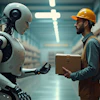
AI-powered real-time translation is changing the equation. A supervisor speaks English, and a line worker hears it in their native language instantly. At one manufacturing facility alone, AI translation covered 12 different languages in real time across the workforce.
According to a recent survey, 78% said real-time language translation between co-workers would be valuable. In food environments where miscommunication can trigger a temperature excursion, a recall, or a compliance violation, that barrier has direct operational consequences.
Language is just one dimension of what becomes visible when every worker is connected.
From workforce data to workforce intelligence
Once every worker is connected, the data picture changes dramatically. You start to see how long shift transitions actually take versus how long they're scheduled for, which zones create bottlenecks, and where safety information gets stuck before reaching the people who need it.
That awareness matters beyond the four walls of any single building. A delayed handoff at a cold storage facility can ripple into shipping windows and delivery commitments downstream. Without data on the human side, those problems only surface after the damage is done.
This is operational intelligence applied to the workforce, the same way warehouse management systems have long applied it to equipment and inventory. Until now, the people on the floor were the one part of the operation nobody could measure. Measuring workforce activity only tells half the story, though. What changes when workers themselves feel that investment is where the transformation begins.
The cultural impact of connected technology
There's an old assumption that frontline workers resist new technology. Recent data suggests otherwise. That same frontline communications survey found that 74% of manufacturing workers are comfortable with AI-powered tools that support safety and productivity in the workplace.
The real cultural shift comes from showing workers that leadership is investing in them. When someone gets a platform that lets them communicate instantly, report issues without leaving their station, and hear safety instructions in their own language, it changes how they feel about coming to work. In a tight labor market, that’s a big deal.
For operators competing for the same labor pool, offering workers real tools and a genuine sense of belonging is becoming a competitive advantage.
What food and supply chain leaders should be thinking now
The food and beverage supply chain has spent decades investing in systems that track every pallet, every temperature reading, and every minute of equipment uptime. But that has created a lopsided dynamic where leadership has more real-time data on a conveyor belt than on the hundreds of workers running the floor. The technology to close that gap now exists. For leaders evaluating where to focus next, the starting point is straightforward.
Start with the communication gap. Look across your facilities, distribution centers, and cold storage operations and ask a simple question. Who has no way to communicate at all? From there, assess where multilingual friction is costing you time and risk, especially around food safety and cold chain compliance. A single miscommunication can trigger consequences that far outweigh the cost of solving the problem.
Then think about workforce data as a category alongside the systems you already rely on for products and equipment. The opportunity now is to apply that same rigor to the human side. The return on connected communications goes beyond efficiency. It shows up in culture, safety, and worker retention. For leaders keeping food supply moving at scale, closing the communication gap on the floor may be the highest ROI investment they have yet to make.