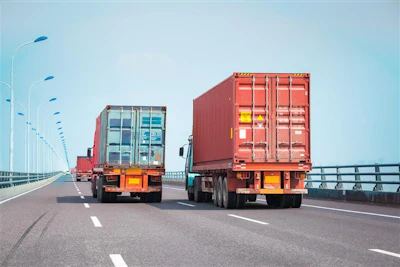
As U.S. companies keep inventories lean to avoid paying tariff expenses on goods sitting in storage, trucks are in higher demand than they have been in four years, according to The Logistics Managers’ Index, presented by Florida Atlantic University, Arizona State University, Colorado State University, Rutgers University, and the University of Nevada, Reno.
“The previously seen shift toward a stronger freight market continues and pricing (and demand) for freight continues to rise, while at the same time capacity continues to tighten,” says Steven Carnovale, associate professor of supply chain management in FAU’s College of Business.
Key takeaways:
· The Logistics Managers‘ Index read at 61.5 in February, up from 59.6 in January, driven by the transportation sector.
· As businesses adjusted to tariff policies, firms have kept inventory levels lean (53.8) to offset existing tariff costs, leading to slower expansion in inventory costs, or the expenses associated with storing and holding goods, (67.8). The strategy has had a direct impact on trucking: with goods moving faster and in smaller batches rather than sitting in warehouses, demand for freight has surged.
· Trucking prices rose to 76.7, the highest level in four years, while available truck capacity tightened to 41, the most constrained since the height of the pandemic shipping boom in late 2021.
· U.S. GDP grew at just 1.4% in the fourth quarter of 2025, down sharply from 3.8% the prior quarter, with economists attributing part of the slowdown to reduced government spending and a pullback in imports after the inventory buildup that dominated most of 2025.
· Looking ahead, supply chain professionals expect conditions to tighten further over the next 12 months to 66.3 and transportation prices forecasted to hit 80.9, a level not seen since March 2022.
“Given the shifting balance of power back toward the shippers, the expectation is that pricing will continue to remain high with commensurate levels of demand and a constricted supply,” Carnovale says. “The potential uncertainty may come as geopolitical tensions continue to rise and subsequently impact direct and indirect costs related to logistics metrics across the board.”