

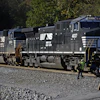
Union Pacific Corporation and Norfolk Southern Corporation submitted an amended merger application to the Surface Transportation Board (STB) seeking approval to create America’s first transcontinental railroad.
Additional analysis reinforces that the combination will drive growth, enable substantial cost savings for shippers and strengthen the U.S. supply chain, saving shippers an estimated $3.5 billion annually.
“After completing the additional work requested by the STB, the facts remain clear: This merger enhances competition and delivers real public benefits that make America’s supply chain stronger,” says Union Pacific CEO Jim Vena. “Our analysis uses complete systemwide traffic data provided by all Class I railroads to identify even more opportunities for our combined railroad to grow and compete.”
“This merger is fundamentally about growth,” says Norfolk Southern president and CEO Mark George. “Shippers have been clear about what they value, and the data backs it up. When single-line rail service is available, they choose it. Our combined network will deliver seamless freight moves within and across the Mississippi watershed markets with one Class I railroad accountable from origin to destination.”
Key takeaways:
· The analysis in the updated application is the first in rail merger history to use 100% actual traffic data provided by all six North American Class I railroads, rather than the sample data available from the STB, making it the most thorough assessment of market and operational impacts ever.
· The deeper analysis confirms the merger will make rail significantly more competitive with long-haul trucking, taking approximately 2.1 million trucks off the road.
· Shifting freight from higher-cost trucks to low-cost rail will save shippers an estimated $3.5 billion annually. Shippers also will save on inventory and equipment costs with the combined railroad’s faster, more reliable service.
· The Union Pacific-Norfolk Southern combination is an end-to-end merger connecting the eastern and western United States with virtually no overlap. The goal is growth through new routes and improved service that removes interchange handoffs that can add 24-48 hours and cost to the supply chain.
· Yhe amended application increases the anticipated number of new premium intermodal lanes operating seven days a week from six to seven, with a new lane connecting Northern California and the Southeast.
· The analysis also confirms the combined company will have sufficient equipment and infrastructure capacity available to support the projected growth.
· Additionally, the amended application confirms the merger will preserve customer access to competitive railroad alternatives and will have no impact on geographic competition or on the availability of independent routes.
· Additional growth will also create more high-paying union jobs. The amended application estimates the combined company will need 1,200 net new union jobs by the third year of the merger to handle new business, up from 900 in the original application.
· The two companies expect the transaction to be completed in the first half of 2027.

![Top Tech Logo 2026 Vertical [color]](https://img.sdcexec.com/mindful/acbm/workspaces/default/uploads/2026/04/top-tech-logo-2026-vertical-color.mWl7RAiZmg.png?auto=format%2Ccompress&bg=fff&fill-color=fff&fit=fill&h=100&q=70&w=100)

![Pros To Know 2026 [color]](https://img.sdcexec.com/mindful/acbm/workspaces/default/uploads/2026/01/prostoknow-2026-color.7ZzE1OPMOy.png?auto=format%2Ccompress&bg=fff&fill-color=fff&fit=fill&h=167&q=70&w=250)


![Top Tech Logo 2026 Vertical [color]](https://img.sdcexec.com/mindful/acbm/workspaces/default/uploads/2026/04/top-tech-logo-2026-vertical-color.mWl7RAiZmg.png?ar=16%3A9&auto=format%2Ccompress&bg=fff&dpr=2&fill-color=fff&fit=fill&h=135&q=70&w=240)


