As the curtains close on 2025, what steps can manufacturers, distributors, and retailers take behind the scenes to quickly rebound from the challenges posed by tariffs and other supply chain disruptions?
Everyone faces different circumstances, but a common way to build savings and increase resilience for the future is outsourcing warehousing and fulfillment. By partnering with an experienced 3PL, these two essential supply chain functions will serve as levers to preserve capital, reduce operational costs, and better satisfy customer expectations.
The case for outsourcing: Cost, complexity, and control
Cushman & Wakefield reported that the warehouse vacancy rate in Q2 of this year reached 7.1%, the highest in 11 years. With abundant space in the market, outsourcing warehousing and fulfillment can offer more than just cost savings on storage from these five channels.
1. Technology
Shippers can benefit from a 3PL’s investment in modern systems and tools instead of investing in a warehouse management system (WMS) or automation infrastructure that might become outdated in a few years.
According to Gartner’s 2025 Supply Chain Technology User Wants and Needs Survey, 74% of supply chain leaders increased their investments in WMS and automation tools this year, but 61% said they preferred partnering with tech-enabled providers rather than managing tools in-house.
Other advantages of partnering with a 3PL include access to predictive analytics and inventory visibility, delivered through dashboards or ERP-integrated portals, for real-time insights into orders, shipments, and stock levels.
2. Labor
The labor market for warehousing and fulfillment remains a persistent challenge, especially during seasonal peaks. Outsourcing shifts the responsibilities of recruitment, training, and scheduling to a third-party provider, enabling shippers to access experienced, flexible labor pools that can be scaled to demand.
The U.S. Bureau of Labor Statistics reported in 2025 that warehouse labor turnover rates remain above 46% annually, underscoring the value of outsourcing workforce management to reduce disruptions.
Partnering with a provider that already has systems in place for workforce management eases the burden. Outsourcing streamlines and cuts labor, equipment, and technology costs by turning fixed expenses into variable ones, while providing access to new levels of expertise and experience.
3. Capital
Building or upgrading a warehouse operation requires significant investments in real estate, racking, robotics, software licenses, safety equipment, and more. Conversely, outsourcing enables companies to avoid substantial capital expenses while achieving a modern, tech-enabled operation.
A 2025 study by Armstrong & Associates found that shippers saved between 18-25% in capital expenditures over three years by outsourcing warehousing and fulfillment operations rather than building internal capabilities.
4. Automation
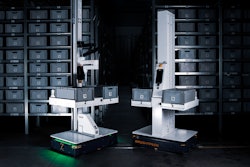
Warehouse automation—from robotic picking to AI-driven forecasting—has become essential for increasing speed and reducing error rates. However, not every operation can justify the investment on its own. Third-party providers can assess where automation is practical based on volume, throughput, and ROI—and implement it accordingly.
McKinsey’s 2025 logistics report estimates that 60% of warehouse automation initiatives fail to meet ROI expectations without scale or optimization—underscoring the advantage of outsourcing to 3PLs with established automation roadmaps.
5. Proximity
As consumer expectations for fast delivery continue to rise, geographic location has become an essential strategic consideration. For instance, a supplier supporting a fulfillment center for a major retailer may need to be nearby to meet just-in-time requirements.
A 2025 Shopify Plus report highlighted that 72% of U.S. consumers now expect two-day delivery or less, making proximity-based fulfillment networks a competitive necessity.
Outsourcing provides shippers with access to warehouse networks in essential locations—such as near ports, population hubs, or specific customer sites—without the time and capital required to build or lease space themselves.
Outsourcing allows you to place inventory where it needs to be, when it needs to be there, without committing to a long-term lease.
Stability matters
Recent disruptions in the freight and logistics industry—from bankruptcies to capacity shortages—highlight the need to assess partner stability. When choosing a warehousing and fulfillment partner, shippers should look beyond rates and seek confidence in the provider’s financial health, operational history, and expansion potential.
The last thing you want is a provider that goes under during your peak season. Picking a stable, diversified partner is crucial to ensuring your business continues smoothly.
Collaborate to compete
Warehousing and fulfillment are two main functions in a competitive logistics industry, but there’s increasing recognition that competition shouldn’t prevent partnerships. Even competitors will work together when overflow space is needed or infrastructure gaps occur.
In a 2025 survey by the Council of Supply Chain Management Professionals (CSCMP), 41% of logistics leaders reported entering cooperative warehousing or capacity-sharing agreements in the past 12 months, citing flexibility and cost savings as the main reasons.
Looking ahead
In 2026 and beyond, shippers will keep shifting their supply chains toward more flexible, outsourced solutions to cut costs and meet strategic goals. The top 3PL providers offer more than just warehouse space; they also supply experienced staff, integrated technology, transportation networks, and additional services that lower costs and make fulfillment and other supply chain steps easier.
Outsourcing warehousing and fulfillment are no longer just about cutting costs. It’s about creating a supply chain that can adapt to changes, withstand shocks, and grow alongside the business.