It is time to retire from the idea that supply chain disruptions are merely temporary headaches. For years, organizations have operated under the assumption that volatility is episodic, a storm to be weathered before returning to “business as usual.” That baseline no longer exists. According to the Chartered Institute of Procurement and Supply (CIPS), “cracks” are forming in the global trading system, with disruption concerns reaching their highest levels in two years. We are witnessing a shift where cost volatility is becoming structural, not situational.
When shipping and logistics costs rise sharply, feeding inflation and crushing margins, the traditional approach of managing supply chains through spreadsheets and retroactive reporting ceases to be a strategy. It becomes a liability. Yet many organizations remain shackled to fragmented systems and manual workflows that leave leaders with limited visibility into their real-time operations. This operational blindness magnifies the impact of every disruption.
To survive this new normal, businesses must pivot from reactive firefighting to proactive resilience, powered by real-time AI intelligence that unifies data and closes the gap between insight and execution.
The high cost of decision latency
The current state of the industry is defined by a disconnect between the speed of market changes and the speed of organizational response. Call it “decision latency.” It is the time lost while teams scramble to aggregate data from disconnected warehouse management systems (WMS), enterprise resource planning (ERP) software, and transportation management systems (TMS). In a stable market, this latency is annoying. In a volatile market, it erodes profitability.
Recent data paints a stark picture of this volatility. In late 2025, 22% of procurement leaders reported shipping and logistics cost increases of more than 10%, signaling sustained pressure heading into 2026. These are not isolated incidents; they are hitting critical product categories hard. Up to 18% of respondents saw similar price spikes in computers and peripherals, while others reported increases in transport equipment and in electrical machinery.
Furthermore, Deloitte cites that 78% of manufacturers rank trade uncertainty as their leading issue, with input costs expected to rise by an average of 5.4% over the next year. When input costs rise and margins compress, the hidden drag of manual data aggregation becomes untenable. Every hour spent reconciling spreadsheets or chasing status updates is an hour not spent mitigating risk. The challenge leaders face today is not just about moving goods; it is about moving information fast enough to protect the bottom line.
The shift from observation to orchestration
The strategic opportunity lies in recognizing that real-time visibility is no longer optional; it is central to resilience. Forward-thinking leaders are realizing that traditional forecasting methods, often reliant on historical data, fall short in a world where the past is no longer a reliable predictor of the future. This is where artificial intelligence (AI) moves from a buzzword to a critical operational asset.
AI adoption is already moving rapidly from pilot projects to operational execution. PwC reports that 53% of organizations are already using AI in at least a few areas to anticipate and mitigate supply chain disruptions, with another 31% actively piloting AI initiatives. These companies are not just buying technology; they are buying time and clarity.
By equipping decision-makers with a unified view of inventory, shipment, warehouse, and last-mile performance, organizations can achieve a level of agility that was previously impossible. This requires a fundamental shift in how we view data, not as a scorecard of what happened last month, but as a live map of what is happening right now.
Unify the data layer to eliminate silos
The first step toward resilience is breaking down the walls between data sources. In many organizations, inventory data lives in one system, transportation data in another, and last-mile delivery details in a third. This fragmentation forces supply chain leaders to piece together the truth manually, often leading to errors and delays. Real-time operational intelligence platforms unify these data streams, providing a single source of truth. When a leader can see the financial impact of a delay immediately, they can act with speed and confidence. This unification allows for the optimization of throughput and the reduction of operational waste, focusing on outcomes rather than just tracking metrics.
Leverage AI for predictive precision
While historical data has its place, AI-powered demand forecasting is the key to navigating dynamic market shifts. A 2023 Gartner study found that companies using AI-driven predictive analytics cut traditional forecasting errors by roughly 50%. This creates a massive competitive advantage. By enabling supply chains to adjust to dynamic shifts in demand, AI helps organizations avoid the twin perils of overstocking capital-intensive inventory or suffering revenue-damaging stockouts. It transforms forecasting from a guessing game into a precision instrument, allowing businesses to align procurement, logistics, production, and fulfillment strategies.
Embrace Agentic AI for proactive mitigation
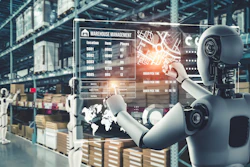
The role of AI is expanding from descriptive tasks that explain what happened to prescriptive and autonomous functions. We are entering the era of “Agentic AI,” where advanced AI agents can now monitor risk across global supply chains, surface alerts early, and even quantify the financial impact of a disruption before it fully materializes. Imagine an AI agent that detects a weather event, calculates the potential “should-cost” value of delays, and recommends alternative suppliers, all requiring only human approval to execute. This moves the supply chain from a defensive posture to an offensive one.
A mandate for resilience
To succeed in today’s unpredictable environment, organizations must consider resilience a top priority, adopting real-time intelligence and proactive approaches to supply chain management. As cost fluctuations, trade disruptions, and operational complexity persist, the old methods of relying on past data are no longer enough.
The SwaS model (Software-with-a-Service) represents a step-change in how companies can future-proof their supply chains. By embedding AI-driven insights directly into everyday workflows and keeping humans actively engaged in key decisions, this model bridges the divide between raw data and practical action. The result is end-to-end visibility, faster responses to disruptions, and true operational agility.
With the SwaS model, supply chains have become dynamic systems capable of not only identifying potential challenges but also recommending solutions and driving measurable, sustained ROI. Adopting this model is more than a technology investment—it’s a strategic decision to build supply chains that are ready to anticipate, adapt, and thrive amid whatever challenges lie ahead. The technology to do so is no longer science fiction; it is the new baseline for survival.