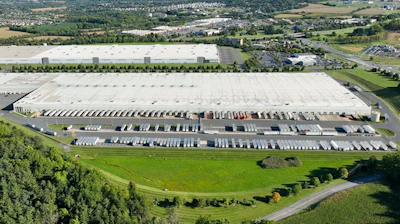
Across industries, consistent patterns are emerging in how yard operations impact enterprise performance. While symptoms vary by facility, the underlying issues and consequences are remarkably similar.
Operational leaders frequently report execution inconsistency across facilities, driven by site-specific processes, reactive labor models, and the absence of standardized operating frameworks. These inconsistencies manifest as high variance in moves per hour, inconsistent dwell times, reduced gate and dock throughput, and unpredictable service levels.
High and unplanned costs are another recurring signal. Poor forecasting, reactive labor adds, and opaque surcharge structures often result in cost-per-move volatility, overtime spikes, invoice discrepancies, and increased detention exposure. These costs are rarely attributed directly to yard operations, making them difficult to diagnose and control.
Accountability gaps persist across many environments. Issues are frequently pushed back to internal teams, with limited root-cause analysis or cross-shift ownership. As a result, problems recur across shifts and sites, driving lower SLA adherence, increased carrier wait times, and inconsistent compliance.
Equipment reliability and workforce readiness further compound execution risk. Deferred maintenance, lack of preventive inspection discipline, and undertrained operators contribute to more breakdowns, downtime, safety exposure, and lower productivity per operator.
Finally, data and reporting limitations remain widespread. Manual logs, incomplete reporting, and a lack of network-wide visibility restrict forecasting accuracy, trend analysis, and performance accountability. Decision-making remains reactive rather than proactive.
Taken together, these issues reinforce one another, amplifying variability while obscuring root causes across the broader supply chain.
At the enterprise level, these execution challenges create strategic tension. Yard operations are often misaligned with corporate, facility, and sustainability objectives, leaving site leaders frustrated by rising costs and inconsistent performance they cannot easily control.
Legacy incentive structures frequently reward contract compliance over outcome improvement, reinforcing transactional behavior rather than continuous optimization. At the same time, executive teams are demanding greater visibility, predictability, and control across multi-site networks, particularly as volatility increases and service tolerance declines.
Technology adoption gaps exacerbate the issue. Digital tools are underutilized or unevenly deployed, limiting their ability to drive standardized execution. As demand patterns become more volatile, enterprises increasingly require yard operations that can adapt quickly without sacrificing safety, cost discipline, or service reliability.
Together, these signals reveal a fundamental disconnect between how yard operations are executed on the ground and how modern enterprise supply chains are governed.
As organizations demand greater predictability, accountability, and performance at scale, the yard remains managed as a tactical function rather than a strategic execution layer.
This report outlines a practical roadmap for closing that gap by elevating yard operations into a unified enterprise yard operating system, enabling leaders to regain control over cost, service, safety, and sustainability across the network.
Strategic highlights
- Yard operations are now an enterprise execution risk.
Once managed locally, yard performance now directly affects network reliability, cost variability, safety, service levels, and sustainability outcomes. - Execution governance matters more than planning sophistication.
Volatility, labor constraints, and electrification pressure are exposing weaknesses at the execution layer where unmanaged yards amplify variability. - The core gap is operating discipline, not technology.
Most yards lack standardized workflows, accountability, and enterprise oversight. Visibility alone has not delivered consistent outcomes. - Yard inefficiencies are hidden but material.
Their impact shows up indirectly through detention, overtime, expediting, inventory delays, safety exposure, emissions leakage, and cost volatility. - Traditional yard models do not scale.
In-house management, labor-only outsourcing, and standalone YMS deployments support activity but fail to deliver enterprise-level governance or outcome ownership. - Outsourced yard logistics is shifting to execution governance.
Leading models move beyond task fulfillment toward standardized operating systems with shared accountability for outcomes. - Electrification is exposing execution maturity gaps.
With hardware parity increasing, differentiation depends on utilization discipline, standardized workflows, and governed execution. - Transition capability is now a prerequisite.
Enterprise adoption depends on the ability to standardize live operations without service disruption, safety risk, or regression. - The yard operating system is the new standard.
At scale, it governs how work is executed, measured, and improved across facilities, not just how activity is tracked. - Provider evaluation criteria must evolve. Cost and coverage are no longer sufficient. Enterprises increasingly prioritize governance, standardization, transition capability, and shared accountability for results.