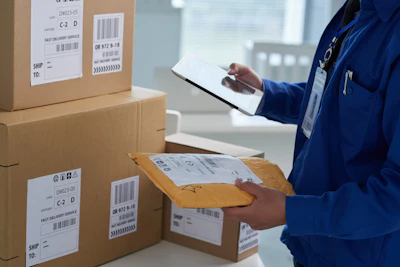
In today’s retail landscape, fulfilment isn’t just an operational task, it’s a strategic decision that shapes customer experience, cost efficiency, and growth potential. At its core, strategic fulfilment is about balancing customer expectations, order volumes per location, and the costs of maintaining multiple warehouses vs. shipping from fewer facilities. Every network design, every location choice, and every technology investment must serve this balance.
Making trade-offs: centralized vs distributed networks
Not every business needs or can afford a network of micro-fulfilment centers. For some, a single, well-located distribution hub can serve a large region efficiently, offering fast and reliable service while keeping operational costs low. For others, particularly in urban markets with high congestion or industries such as fashion, more distributed networks or omnichannel strategies may be necessary to meet consumer expectations for speed and flexibility.
Strategic fulfilment is therefore a careful trade-off. Ecommerce brands must understand where their customers are, what delivery speeds they expect, and how volumes vary by location. They must weigh the benefits of multiple warehouses against the added complexity and cost of running them. There is no one-size-fits-all solution; the right approach depends on the business model, market expectations, and available resources.
Strategic location drives performance
By placing facilities in regions that maximize coverage, companies can offer strong service across large geographies without unnecessary overhead. For example, two strategically positioned warehouses can effectively serve the entire United States, balancing delivery speed and reliability with operational efficiency.
Location decisions influence more than cost; they affect resilience and service consistency. Placing inventory close to demand allows retailers to absorb regional peaks, respond to disruptions, and reduce late deliveries, but overextending with too many nodes can increase complexity and costs without delivering proportional benefits. Strategic placement, rather than simply adding more facilities, ensures the network is efficient, reliable, and scalable.
Technology as a force multiplier
Advanced technology is a critical enabler of strategic fulfilment. AI-driven demand forecasting, real-time routing, and automation allow retailers to optimize trade-offs between service, speed, and cost. AI can allocate inventory dynamically across locations, predicting regional spikes and shifting stock to meet demand.
Technology therefore allows fulfilment providers to make informed decisions, whether managing a single hub or multiple facilities. By using real-time data and predictive insights, ecommerce brands can maximize efficiency, minimize errors, and deliver consistent service without unnecessary investment in extra nodes.
Strategy first, network second
Ultimately, strategic fulfilment is about deliberate choices that balance speed, cost, and customer experience. It isn’t defined by the number of warehouses or the latest industry trend, nor does it require every business to adopt micro-fulfilment or hyper-local networks. For some, a few carefully chosen facilities deliver the right outcomes; for others, more distributed or omnichannel approaches are appropriate.
The essential principle is that fulfilment strategy should be guided by business needs, customer expectations, and operational realities. By prioritizing the right trade-offs, retailers can deliver excellent service, manage costs, and build a fulfilment network that supports sustainable growth in a fast-changing market.