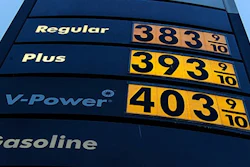
As conflict in the Middle East holds Brent crude above $100 a barrel, manufacturers across the country are once again looking to cut down on logistical costs. Procurement teams are negotiating up and down the supply chain for better freight rates. A little here and a little there eventually add up, the reasoning goes, and a few percentage points of breathing room will keep the operation alive until prices eventually come down.
There is nothing wrong with saving money on the margins; small costs really do add up. But a sharper bidding strategy will not offset the kind of price swings that have seen oil move 7% in a single session on ceasefire rumors alone. The manufacturers who weather sustained fuel-price volatility are the ones making structural changes to how they source and ship their products.
The four measures that follow offer a framework for reducing fuel exposure at the root.
1. Consolidate loads
Load consolidation is the most direct way to reduce fuel cost per unit shipped. Fewer trucks moving more freight means less total diesel burned. In practice, this means ensuring optimal cube and weight utilization on every trailer through better shipment coordination, standardized dimension capture at origin, and load-optimization tools that account for delivery sequences and time windows.
The goal is not, of course, to fill every truck to 100% capacity at the expense of service reliability. It is to close the gap between current utilization rates and what is achievable without missing delivery windows. That requires accurate demand forecasting, disciplined terminal staging, and holding back half-full shipments wherever deadlines allow.
Pool distribution, where shipments bound for the same region consolidate at a hub before breaking into local delivery routes, allows for consolidation on an even larger scale. Flexibility is preserved on the delivery end while cutting costs for the majority of the distance.
2. Reduce empty miles
Deadhead trips—where trucks burn fuel without carrying freight—are a major source of cost leakage. The ATRI’s most recent report puts deadhead rates at nearly 17% of total miles driven. Those numbers are bad for business under any circumstance, and they are simply unsustainable in a fuel market like today’s.
The solution starts with treating empty miles as a network problem rather than a carrier problem. Manufacturers who share volume forecasts, maintain flexible pickup windows, and create round-trip route plans give carriers the information they need to book backhaul loads before a delivery is complete. Simply pre-planning the next load 100-200 miles before drop-off can negate the need for a deadhead run.
Load-matching platforms and TMS integration have made this operationally feasible at scale, but the underlying requirement is data sharing between manufacturers and carriers. Transparency about demand patterns, seasonal shifts, and regional freight availability allows carriers to build consistent corridor strategies where both outbound and return freight exists. The manufacturers who do this well tend to get prioritized when capacity tightens, which is often also when fuel prices spike.
3. Utilize rail
Rail moves a ton of freight roughly 450 miles on a single gallon of fuel. Trucks move that same ton about 130 miles. This means that, in long-distance lanes where delivery speed is flexible, intermodal rail can offer substantial fuel savings.
The optimal strategy for most lanes is to combine trucking and rail for efficiency and flexibility. Trucks can handle the drayage between shipper or receiver and the nearest rail terminal, while rail covers the long, fuel-intensive middle segment. This intermodal model works best on predictable, high-volume corridors where schedule consistency matters more than short-notice delivery.
That said, the plausibility of utilizing rail will vary from region to region. Not every lane has adequate infrastructure. But the efficiency advantage that rail-freight can offer more than justifies the time it takes a manufacturer to map their freight flows against rail corridors for even a handful of convertible lanes.
4. Shorten the supply chain
Network design is a structural lever many manufacturers underestimate. Every mile of supply chain length should be viewed as a mile of fuel-cost exposure. A manufacturer who sources components from Asia, routes them through West Coast ports, and trucks them to assembly plants in the Midwest must multiply spikes in fuel cost by every leg of that chain.
Proximity to end markets and suppliers reduces that exposure at the root. A manufacturer based in northern Mexico and connected to U.S. markets via established border corridors along I-35 carries a fraction of the freight cost burden of someone shipping trans-Pacific. The distance from Monterrey to Dallas is roughly 600 miles by truck. It is more than 10,000 miles of ocean freight plus another 1,500 by rail or road from Shanghai to Dallas. That’s easily 10 times the exposure when fuel prices rise.
Manufacturers can begin by identifying the nodes in their supply chain that contribute the most distance, then evaluate whether those nodes could be relocated or replaced by sites that are closer to the end market. New locations can be phased in gradually once selected in order to avoid downtime.
Bottom line
Manufacturers will still be dealing with the volatility of fuel costs long after the Hormuz crisis has passed. Persistent geopolitical disruption has become a reality of the modern supply chain, and merely being reactive is no longer a viable strategy. True resilience—the kind that prices volatility into the operating model—requires structural change.