Peak season is where the cracks show first. When volume surges and every team is stretched thin, the same scene starts playing out across the economy. A warehouse manager is told a critical item is unavailable. A nurse is told a needed supply has run out. A production line goes quiet because one component never arrived. Then someone discovers the item was on site the whole time — in a back room, on a truck, or waiting in a receiving queue. It was never missing. It was invisible. The information that would have connected it to the work it was holding up never reached the right person in time.
The lesson translates far beyond aviation, one of the most expensive and least understood failure modes in any operation that moves physical goods. The fix described here was built under peak-season pressure, in commercial aircraft maintenance, where a single delayed part can strand a planeload of passengers. It earned its keep when the stakes were highest — then kept running every day because the underlying problem never goes away.
When a single missing part grounds an aircraft
Commercial aircraft undergo constant maintenance, organized into individual, tracked tasks, each signed off before an aircraft can fly. When a critical, non-deferrable task cannot be completed, the consequences arrive fast: the aircraft is held out of service, flights are delayed or cancelled, connecting routes unravel, and passengers are stranded — a direct revenue hit plus a cost to the airline’s reputation.
A task can stall for a few reasons — too few qualified technicians, conflicting work on the same aircraft, or a required part that is not in stock. The parts problem is the most deceptive. A shortage of people or workspace is visible; a parts problem looks like a supply gap when it is really an information gap. The part exists. No one can find it in time.
Parts that exist but cannot be found
Visibility breaks down at two points. First, a part has already shipped, but the only person who can see the tracking is the buyer who placed the order; everyone else is left guessing. Second, and more commonly, the part has physically arrived on site, or been transferred in from another location, but has not yet been logged into the system. Until that receiving step happens, it is invisible to everyone searching the inventory records, even though it is sitting a few feet away.
This is not anyone’s fault. Receiving teams handle hundreds of incoming items against competing deadlines, with no signal telling them which single box — out of many stacked and waiting — is keeping an aircraft on the ground. The urgent one waits behind dozens of routine ones, and during peak periods the odds of it surfacing in time only worsen.
Making the invisible visible
The system designed to close that gap took shape during a peak stretch, when the cost of a grounded aircraft made the problem impossible to ignore. It had three layers — modest alone, powerful together. The first fixed the data at its source, bringing suppliers onto an electronic data feed so shipment tracking flowed in continuously rather than living in one buyer’s inbox. For the first time there was a single, shared picture of what was in transit.
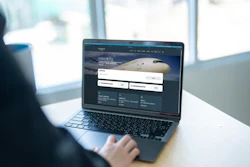
The second layer turned that data into a decision-making tool: an hourly dashboard of parts in transit or moving between locations. The key design choice was what it left out. Rather than showing everything in motion — a report nobody reads — it surfaced only parts that had been requested and tied to a genuine top priority. That ruthless filtering was the difference between an unusable data dump and a tool people relied on.
The third layer closed the loop with automation: a short report generated each morning, listing every priority part and the exact task waiting on it, sent straight to the receiving team with senior leadership copied. That leadership visibility gave the priorities organizational weight, so receiving the right part first became an expectation rather than a request that could slip down the list. Built for peak season, the routine proved just as valuable on an ordinary Tuesday — so it never stopped running.
The results
The impact showed up immediately. Identifying which parts to prioritize — once a matter of digging through the system and cross-referencing tasks by hand — became trivial: the right parts appeared on the dashboard and in the morning report, matched to the work they were holding up.
The time savings compound across volume. Before the system, handling one part took about 40 seconds to look up plus roughly two minutes to draft and send a manual flag — around 160 seconds. Afterward, the lookup took about 5 seconds and the flag went out automatically, saving roughly 155 seconds per part. On a typical day, about 73 parts needed prioritizing: close to 3.1 hours saved daily, or roughly 1,150 hours a year. At an assumed average California labor rate near $23 an hour, that is on the order of $26,000 in annual labor savings.
The labor savings are real, but they undersell the point. The bigger outcome was fewer aircraft held out of service — every delay avoided protects a flight schedule, preserves the revenue tied to those flights, and prevents the downstream chaos of cancelled connections and rebooked passengers. The system was born to survive peak season, but its quieter payoff was year-round: the discipline that prevented a holiday-rush meltdown also caught the lone stalled part on a slow week, before it became a problem.
The transferable lesson
A large share of “out of stock” problems are not supply problems at all. They are visibility and prioritization problems wearing a supply problem’s clothing. The item exists; the information linking it to the work it blocks never reaches the right person in time. Buying more inventory does nothing to fix that. Peak season just makes the problem loud enough to act on — the smarter move is to keep the fix running once the rush is over, because the leak never fully closes on its own.
Three moves solve it, and they generalize across industries. First, capture the data at its source: pull tracking and status into one shared system electronically, instead of letting critical facts live in inboxes and people’s heads. Second, filter ruthlessly: surface only what is both requested and blocking a genuine top priority, because disciplined filtering, not more data, is what makes a dashboard get used. Third, automate the hand-off: push the right information to the people who can act, on a fixed schedule, with leadership visibility so it holds.
A hospital can apply the same pattern to surgical supplies that have reached the dock but are not yet logged, while a procedure waits. A manufacturer can apply it to components moving between plants, where one delayed subassembly idles a line. A retailer can apply it to back-room stock while the sales floor reports the item sold out. The industry changes; the pattern does not. Connect physical availability to informational availability, and the work simply stops stopping — in peak season and every season after.