
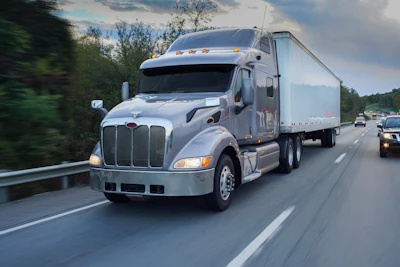
The fourth-party logistics (4PL) market is set to grow from its current market value of more than $86.2 billion to over $163.7 billion by 2035, as reported by Global Market Insights, Inc.
The market expansion is fueled by the rising intricacy of international supply chains, driven by growing trade volumes and global commerce integration.
“Businesses increasingly require comprehensive logistics solutions that simplify coordination, improve operational efficiency, and enhance visibility across multiple stakeholders. Fourth-party logistics providers serve as strategic partners, managing entire supply chains on behalf of clients rather than merely executing isolated logistics tasks,” the study says.
Key takeaways:
· The supply chain optimization segment held a 29.9% share, generating $25.8 billion in 2025. Businesses are increasingly focusing on end-to-end efficiency, making supply chain optimization a cornerstone of 4PL service delivery.
· The solution integrator segment held a 47.2% share in 2025. Growth in this segment is driven by increasing global supply chain complexity, digital transformation initiatives, and the rising demand for real-time monitoring and predictive analytics.
· U.S. 4PL market was valued at $27.8 billion in 2025 and is estimated to grow at a CAGR of 7.2% from 2026-2035. The country's sophisticated logistics infrastructure and multi-modal transport capabilities favor the adoption of integrated 4PL solutions. Federal policies promoting supply chain resilience, transparency, and sustainability encourage enterprises to implement comprehensive logistics management models. Plus, trade policy priorities emphasize secure, diversified supply chains, prompting businesses to adopt 4PL strategies that mitigate disruption risks from geopolitical and global economic pressures.









![Top Tech Logo 2026 Vertical [color]](https://img.sdcexec.com/mindful/acbm/workspaces/default/uploads/2026/04/top-tech-logo-2026-vertical-color.mWl7RAiZmg.png?ar=16%3A9&auto=format%2Ccompress&bg=fff&dpr=2&fill-color=fff&fit=fill&h=135&q=70&w=240)

