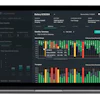
IFS launched IFS Zero, an agentic emissions operating system that enables organizations in asset-intensive industries to measure, disclose, and optimize their carbon emissions across Scope 1, Scope 2, and Scope 3 categories.
"With IFS Zero, we're fundamentally changing how industrial companies approach emissions management. For too long, sustainability has meant slow deployments, manual spreadsheets, and reporting after the fact. IFS Zero replaces that with an agentic operating system that delivers an emissions baseline in short timescales and enables visibility into your day-to-day operations. It allows customers to move beyond compliance and start using sustainability as a true strategic advantage," says Caitlin Keam, VP, manufacturing and sustainability applications, at IFS.
Key takeaways:
· IFS Zero is purpose-built for carbon emissions management and works in concert with the broader IFS Sustainability Management module: the single destination where all sustainability data converges, spanning emissions, social impact, diversity metrics, and more, for corporate sustainability reporting.
· While Sustainability Management provides the overarching framework for enterprise-wide sustainability disclosures, IFS Zero goes deep on carbon, giving industrial organizations the granular, real-time emissions intelligence they need to move from reporting to action.
· IFS Zero puts agentic AI to work across the entire data lifecycle – mapping sources, validating data, flagging anomalies, and producing audit-ready outputs – so sustainability teams spend less time on administration and more time driving decarbonization
· IFS also launched IFS Cloud 26R1, which delivers targeted enhancements across enterprise resource planning, service management, enterprise asset management, and aviation maintenance, adding control and traceability at the operational moments where margin is won or lost.