Today, supply chains can fail fast and without warning. Between demand volatility and supplier disruption, forecast accuracy can be the primary differentiator between seeing risk early and absorbing it late. That's where data-driven forecasting comes into play.
Data-driven forecasting and predictive demand planning (the practice of generating demand projections and supply decisions from a continuously updated stream of integrated data) allows modern organizations to plan faster, smarter, and more effectively.
Traditional forecasting methods rely heavily on historical sales data processed through monthly or quarterly planning cycles. Teams align on only the projected demand figure which informs procurement, inventory positioning, and production scheduling until the next planning run. The issue is overreliance on purely historical data. Planning based solely on what the market already did doesn't account for what suppliers are currently doing, what customers are now signaling, proactive pricing and marketing effects, or which external variables (currency shifts, regulatory changes, geographic concentration of materials, etc.) will reshape cost and availability moving forward.
Data-driven forecasting draws from real-time demand signals, integrated ERP and supplier data, customer behavior patterns, and external market variables to produce forecasts that dynamically update as conditions change, measuring current conditions while continuously calibrating to project forward.
The most impactful result is accelerated decision-making. Technology can surface issues earlier than humans can, within lead time while options still exist: renegotiating sourcing, adjusting pricing, or rebalancing inventory. This helps prevent stockouts, production delays, and margin erosion.
How modern tools help enhance supply chain planning
Data-driven forecasting is inherently propped up by modern, cutting-edge tech tools. Once implemented, operators see improvements across:
Real‑time data integration and predictive analytics
There are numerous plants where demand signals, supplier scorecards, and customer behavior patterns all exist as separate, disconnected data sources. This means planners must spend significant time tracking down and reconciling information before even beginning to interpret it. By the time the analysis is complete, the data is already stale and potentially wrong.
The right tool can consolidate inputs into a unified data environment that connects those procurement activities, inventory levels, production schedules, and customer-facing data points across locations and business units.
A dedicated AI and machine learning-powered forecasting engine can then enhance this integrated data environment, identifying and acting upon patterns that static, history-only models systematically miss.
Scenario planning and what‑if analysis
In an increasingly volatile environment, forecasting must come with the ability to revise and adapt. Modern solutions enable planning teams to run multiple demand and supply scenarios in parallel, evaluating the downstream effects of disruptions like demand spikes, extended lead times, or sourcing changes against current inventory and production commitments before acting.
What-if analysis within the platform then enables planning teams to test exactly those scenarios (simulating tariff impacts, vendor substitutions, or demand rerouting across facilities) against live data before creating a Plan B or C. This degree of insight and proactivity is critical in the face of disruption because it enables organizations to make faster decisions under pressure.
Outcome metrics and business impact
Forecast accuracy has direct, measurable effects on inventory carrying costs, stockout frequency, and order on time and in full (OTIF). But, if you cannot continuously track actual performance (good and bad), you should not trust the forecast at all.
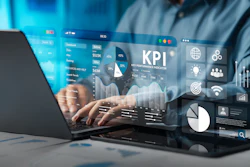
The right platform supports ongoing performance measurement through dashboards and KPI tracking. Forecast accuracy is visible continuously and over time. So, operators can monitor accuracy trends, identify where models are underperforming by product category or geography, and feed that measurement back into the forecasting process to maximize accuracy and impact.
What to look for in a data-driven forecasting solution
The most important thing that supply chain and planning leaders must consider when evaluating forecasting platforms is ability to perform under real operating conditions. After all, it’s easy to excel in controlled demonstrations. But the supply chain landscape is fast-paced, high-stakes, and increasingly volatile. Your solution of choice must hold up.
Real-time demand sensing is a critical foundational element. Any forecasting solution that draws only from periodic data exports cannot support the response speed that modern supply chain conditions require. Your platform of choice should ingest demand signals continuously and update planning outputs accordingly.
Integrated ERP and forecasting data also matters because disconnected systems require manual reconciliation and introduce lag between what the business is experiencing and what the planning system reflects. Platforms built natively within ERP environments eliminate that gap by design.
Remember: Forecasting is one area where AI frequently outperforms human intuition, due to the sheer volume of data and variables, the need for constant recalibration, and the need to monitor accuracy over time. That’s why the presence of AI and machine learning predictive models is critical. Models must be capable of incorporating external variables, such as market signals, supplier data, and customer behavior patterns, as well as recalibrating as new information arrives.
Scenario planning capabilities can also help clarify a stronger investment. The ability to evaluate multiple scenarios at once and to then share those projections across procurement, finance, and operations will be critical in executing on those accelerated decisions.
Finally, dashboards, KPI tracking, and anomaly alerts are needed to close the feedback loop. Platforms should surface deviations from expected demand patterns as they emerge and make forecast performance metrics (by product and region, for example) accessible to the planners who depend on them.
It all comes down to the reason why you deploy software systems in the first place: so you’re able to drive the business confidently with your analytics. Make sure to choose a platform that enables you to make faster decisions confidently.
Transform planning with data‑driven forecasting
Data-driven forecasting and planning equip supply chain teams with the visibility, speed, and analytical depth to make decisions confidently, even in the face of inevitable disruptions. But it does require investing in the right tools.
Demand signals, supplier data, and ERP information should all be connected in a single planning environment. This way, the forecast can account for what’s coming, allowing operators to act early enough to matter.
So, when the next disruption inevitably hits, your operation will be best positioned to adjust, and adapt.