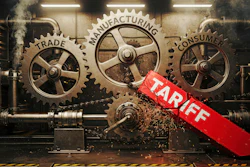
Countries that build dense regional networks of production capacity, materials, suppliers and technical expertise gain a clear advantage in scalability, speed and resilience. This is not about individual companies competing factory by factory. It is about nations positioning themselves as global manufacturing centers in strategically important sectors. India’s push to become a global electronics hub reflects this reality.
In 2025, the Modi government approved $4.6 billion in new investments in India, targeting electronics components, a move designed to localize critical supply-chain inputs and reduce dependence on China. The initiative spans 11 component categories used across telecom, consumer electronics and automotive markets, with expected output reaching $28.6 billion.
Instead of just concentrating on final assembly, India is using component control to strengthen its position in global technology supply chains. At the same time, multinational manufacturers are expanding beyond China, building parallel supply networks across India, Vietnam, Mexico and other markets. This diversification is reshaping sourcing decisions, supplier relationships and risk management, placing India’s electronics ambitions at the center of that recalibration.
Why India’s electronics ecosystem matters
Manufacturing ecosystems do not emerge by chance. They are built through deliberate industrial policy, sustained investment and coordination across public and private actors. Production-linked incentives, including India’s component-focused push, are designed to create the density required for scale, efficiency and durability.
By moving beyond final assembly into a full component ecosystem, India increases the likelihood of becoming a strategic alternative to China rather than a supplementary production base. Components anchor supply chains, shaping lead times, cost structures, quality control and the ability to respond to policy or market shocks. A deeper domestic component base shortens supply routes, improves pricing flexibility and reduces exposure to concentrated sourcing risks.
Ecosystem depth also determines whether manufacturing growth can be sustained in high-growth sectors such as advanced electronics, electrification, 5G and connected devices. India’s component investments allow early participants to scale alongside these markets while aligning capacity with long-range demand trends. Over time, this creates a reinforcing cycle: greater capacity attracts more programs, higher volumes justify further investment and added capability lowers barriers for future entrants.
The critical distinction is scale. Many countries can attract assembly operations. Far fewer can support complex electronics manufacturing once volume, speed and reliability become critical. Reaching that level requires more than incentives or individual factories. It depends on whether the surrounding ecosystem is dense enough to perform under pressure.
The importance of ecosystem density
As global supply chains spread across more countries in the name of resilience, manufacturers face a new risk: insufficient ecosystem density. Building advanced factories alone is not enough. A factory without nearby suppliers, skilled labor, logistics infrastructure and supporting services is structurally constrained, regardless of how modern the equipment may be.
Standing up a factory in isolation is comparable to building a gas station before there are roads, vehicles, or licensed drivers. Production may start, but scaling efficiently becomes difficult and costly. Ecosystem density determines whether manufacturing operations can ramp quickly, absorb shocks and remain competitive over time.
India’s investment in its component industry directly addresses this challenge. By localizing upstream inputs, the country reduces reliance on long, fragile supply routes and enables manufacturers to operate with greater predictability. This makes it easier for global producers to establish dependable operations that can scale when demand shifts or disruptions occur. Over time, density compounds, attracting additional suppliers, talent and capital.
How geopolitics and trade pressure shape India’s role
Large-scale manufacturing ecosystems also provide a buffer against geopolitical pressure, including tariffs, export controls and trade disputes.
China’s experience illustrates this dynamic. Despite a 26% decline in trade with the United States in 2025, China’s trade surplus with the rest of the world grew by 20%, reaching a record $1.2 trillion. Ecosystem scale enabled China to not only redirect output but accelerate manufacturing momentum despite targeted policy actions.
As geopolitical tensions rise and the risk of new tariffs persists, India’s growing domestic component ecosystem offers similar stabilizing potential. For manufacturers and brand owners, ecosystem depth increasingly matters more than short-term incentives. Predictability, redundancy and the ability to shift production without reengineering entire supply chains are becoming decisive factors in location decisions.
India’s approach aligns with this reality. By strengthening its internal supply base, the country improves its ability to absorb external shocks while offering companies a more stable operating environment. This positioning is particularly attractive for firms seeking to balance cost, resilience and geopolitical risk in an increasingly fragmented trade landscape.
Demand planning in an ecosystem-driven shift
From a global perspective, India’s industrial policy does not directly influence consumer demand for electronics products. Demand for smartphones, PCs or connected devices is shaped by economic conditions, interest rates, consumer confidence and technology cycles. A policy initiative in one country does not change those fundamentals.
The implications are different, however, when viewed through the lens of a contract manufacturer operating in India, whether an Indian firm or a multinational with local operations. For these companies, demand for manufacturing services is tightly linked to ecosystem investment. Government-backed incentives and component localization materially affect the amount of production allocated to India and the rate at which that allocation grows.
This demand dynamic is non-linear. Once ecosystem density reaches a critical threshold, growth can accelerate rapidly as more products, programs and customers shift into the region. This is the upside India’s policymakers are targeting.
The challenge lies in planning for that growth. Traditional demand forecasting methods assume that historical patterns will repeat. India’s industrial strategy is explicitly designed to break from historical trajectories and create a faster, less predictable growth path. Planning in this environment requires more sophisticated approaches.
Manufacturers operating in India could adopt tools that support probabilistic demand planning, incorporating multiple market uptake scenarios rather than single-point forecasts. They can collaborate closely with ecosystem partners, sharing demand ranges so suppliers can prepare capacity and material commitments while preserving upside flexibility. Alignment across sub-tier suppliers is critical because ecosystem performance depends on collective readiness, not isolated factory output.
Advanced demand planning platforms increasingly rely on AI-driven signals to sense changes in market conditions, trade policy and customer behavior. These systems enable manufacturers to adjust plans dynamically and keep partners synchronized as demand materializes. In an ecosystem race, coordination and responsiveness are as important as cost.
Why the timing matters
Trade tensions that escalated in 2025 are reshaping global manufacturing. Major brands are reassessing where and how they produce, often in real time.
This is not an incremental adjustment but a generational reordering of supply chains. Countries that want to compete as manufacturing hubs should act while sourcing decisions remain fluid. Once ecosystems mature, they become self-reinforcing and difficult to displace.
India’s willingness to commit capital, align policy and signal long-term intent gives it an advantage as manufacturers rebalance. The window for entry will not remain open indefinitely.
As supply chains reset under geopolitical and economic pressure, India’s strategy positions it as an emerging pillar of global high-tech manufacturing. Execution and sustained investment will determine the outcome, but the direction is clear and the implications are global.