The past year of shifting trade policies transformed supply chain risk from an operational issue into a board-level concern. They exposed a massive visibility gap that procurement leaders, risk managers, and financial officers alike didn’t realize they had. When tariffs were put into effect, many companies didn't have a reliable way to understand how the trade policies would impact their business operations as they lacked a true understanding of their deeper-tier supply chains and risk dependencies that require real-time mitigation. Fewer than 10% of Fortune 1000 companies have visibility into their sub-tier supply chain. Companies only using ERP data must bring external signals, i.e. market data, into consideration and orchestrated together for optimal supply chain continuity.
A recent McKinsey & Company survey of 100 companies found that 95% of respondents have visibility into their Tier 1 supplier risks. When looking into Tier 2 and beyond, that number dropped to 42%. With the average S&P 500 enterprise having over 1,700 direct suppliers and 1.5 million relationships across three tiers, the reality is that the risk is rarely obvious at the primary supplier level. More often that not, risks are typically buried within the broader sub-tier and difficult-to-pinpoint specific supplier risks. Companies often think of their global supply chain as a large pyramid of interdependent relationships. However, when it comes to identifying specific risks, you’re actually, in practice, identifying individual diamond risks across the supply chain.
Sub-tier risks feel quiet but disrupt loudly
As the risk landscape evolves, the most damaging supply chain disruptions no longer announce themselves in the headlines. Today, these diamond pattern risks start as smoke signals that compound quickly.
As an example, the Crowdstrike and Microsoft cyber incident in 2024 created a much larger wave of global disruption than many thought. Specifically, this combined impact represented 1,700 first-tier suppliers and over 1 million sub-tier suppliers. These challenges are exacerbated by geopolitical tensions that impact today’s winner take-all AI race between United States and China with downstream implications for critical supply chain elements such as rare earth minerals, precious metals, and global FIAT currencies.
With the new U.S. administration’s focus on tariffs vs. regulation and sanction tools as primary from 2020-2024, we witnessed in 2025 a 519% year-over-year increase in U.S. tariffs and 17 out of 19 Chinese introduced export controls targeted the United States. The tariffs implications require real-time monitoring capabilities that span both ERP and market data signals to proactively mitigate supply chain risks. From a strategic standpoint, without next-generation IT and OT orchestration, companies have no chance to react in time.
For example, when China introduced export curbs on rare earth minerals, the impact surfaced more slowly as semiconductor and material costs rose as pricing worked its way through multiple tiers of the supply chain. Electronics companies were forced to diversify their supply chain considerations to avoid potential cost increases for China mineral dependencies. Undoubtedly, the ripple effect of the rare earth minerals has just began and will be a material weapon for supply chain dominance by both the United States and China.
In the new era of uncertainty, quick and straight forward supply chain resilience tactics are unlikely to be as successful as they were during the era of globalization
The next wave
Beyond tariffs, regulations, and sanctions, multiple emerging strategic risk factors require a more comprehensive resilience program that encompasses cyber, catastrophic, ESG, geopolitical, finance, and restrictions as a comprehensive insurance umbrella for F1000.
Perhaps the most notable example is the proliferation of data centers required to power the global AI war led by both China and the United States. Data centers must operate in a world with less water, less power, more catastrophic storms and the business model that requires threading the needle to hedge this complicated web of interdependent constraints. As a result, data center IT disruptions can cascade into planning systems, logistics coordination, and supplier communications at exactly the wrong moment. According to interos.ai data, 20% of global data centers face high summer heat risk and 18% face extreme drought risks.
In parallel, Gen Z labor unrest is poised to move from disruption to eruption as the youth bulge across the globe continues to expand. Nearly 50% of countries that experienced recent protests have high political instability. With strikes and protests increasingly disrupting trade on a global scale, labor volatility has become a first-order consideration in sourcing decisions.
Perhaps the most intriguing chess game in global supply chain will be the ongoing currency volatility, driven by weakened trust in central banks, collapsing FIAT currencies, and China’s debasement trade interest to weaken the U.S. dollar, all combined, creates enormous pressure. Operating costs like liquidity gaps, contract repricing, and higher hedging premiums will remain tricky to navigate for the foreseeable future.
Avoiding black holes
Monitoring these risks across supply chains is entirely dependent on data. Data platform optimization always requires consideration of both coverage and accuracy. Without high fidelity signals, companies can quickly find themselves in supply chain data black holes.
China has notoriously raised some doubt when publishing key economic indicators like foreign
investment, unemployment and property data. In so doing, the world’s number two economy widens and blurs global economic data. To be fair, even the United States has more recently faced transparency concerns in the timeliness or gaps in data reporting due to government spending cuts.
So, how are businesses expected to make informed decisions about their operations as they lose the signals from the leading superpowers?
· First, document where critical risk decisions rely on external data feeds outside of your control, whether that’s trade data, port signals, labor stats, or compliance lists. This allows you to understand where gaps need to be addressed.
· Leverage alternative data intelligence. Pairing public sources with private datasets like supply chain knowledge graphs, supply chain risk factors, commercial telemetry, or perhaps satellite data reduces single-source dependencies on ERP data.
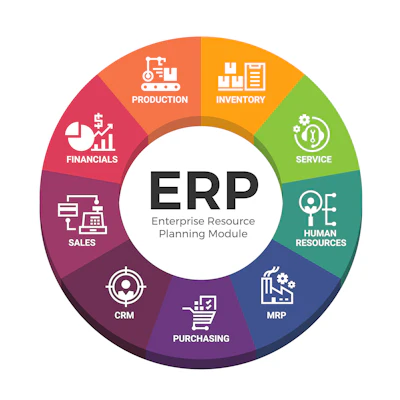
· Prioritize ERP and market data working together for a 360-view of supply chain risks and consider supplemental signal enhancement from survey-based data for optimal decision support.
First-party operational data has always been a defensible intelligence asset to navigate global supply chains. However, due to the increased complexities and to what often what amounts to more weight being put on external factors, the value of market data signals is on the rise. When public data falters and signal fidelity is compromised, the aggregation of both private and public data diversifies the risk dependencies of these signals being used separately in different systems.
Next-generation ERP plus operational technology (OT) will be built as a pure intelligence layer, which feeds back into ERP systems for workflow and execution. The user interface and intelligence layer is the new battlefield for technology companies to win to stay relevant with the Fortune 1000. Each vertical has its own winner as the adaptation for AI use cases is somewhat unique. Next-generation ERP and OT, combined with AI, will be the brain for supply chain intelligence. Think of today’s ERP as tomorrow’s database.