For years, supply chain leaders have accepted the axiom that greater visibility is the key to building a more resilient and responsive operation. It’s prudent wisdom, particularly given that some veteran managers can remember a time when they lacked even rudimentary insights into inventory, shipments, and materials moving through their networks.
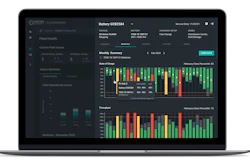
However, while it’s clear that most sophisticated supply chains have more visibility than they did a decade ago, the conversation must continue to evolve. Countless organizations now have the latest tools at their disposal: transportation management systems, RFID, GPS data, sophisticated dashboards, and ever-expanding sets of data. They can see more of their supply chain than ever before, and with greater speed and transparency.
But surveillance alone does not make a supply chain resilient or robust. Leaders must have the ability not only to see problems unfolding in real time, but also to turn data and insights into actions that add value.
From visibility to decision-making
Consider a late inbound shipment. Knowing that the shipment will arrive a week behind schedule is better than suddenly discovering the problem when a production line runs out of material.
But the knowledge of the delay is not useful in a vacuum. What matters are the questions that come next: How much inventory is available? Can inventory be reallocated from a location with surplus materials? Is an alternate supplier available to cover the gap? And most of all, which customers’ orders are at risk?
Visibility tells the organization what is happening. Actionable visibility provides enough clarity and context for managers to determine what can be done about it.
As supply chains become more complex, this distinction is only growing more vital. And equally important is ensuring that this visibility exists throughout the network, and that partners can collaborate around that information to act in tandem. After all, each stakeholder holds a different piece of the puzzle. Manufacturers understand production capacity constraints, carriers understand transportation conditions, pallet providers understand shipping platform availability, and so on.
The next metric: Decision latency
Supply chain managers measure a wide range of metrics and key performance indicators. One metric, which we are borrowing from the business intelligence and data warehousing disciplines, deserves more attention: decision latency.
Decision latency is the amount of time between an actionable insight becoming visible and the necessary actions being taken to respond.
A company, for example, might learn that a high-volume product is consistently piling up at one distribution center while another location is replenishing the same inventory more frequently and at a higher transportation cost. The insight is valuable, but if days are spent validating the data, coordinating with transportation partners, and securing approvals, the value of taking action may decrease.
Another organization might notice the same pattern and respond within hours or minutes because the relevant partners share a common view of the data, understand its implications, and are empowered to make the necessary decisions in real time.
It isn’t because the data was more visible or the technology was more advanced. It’s probably that the organization had a more clearly defined process and a stronger collaborative model in place to collapse the decision latency.
Visibility at the operational level
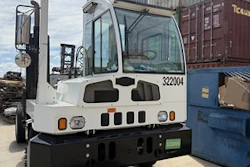
Some of the most useful visibility lessons come from surprisingly ordinary parts of the supply chain, like the shipping assets we take for granted.
In the pallet business, for example, RFID-enabled reusable assets can provide granular information about where pallets are moving to and from, how long they remain at a facility, and where inventory may be accumulating within a network.
If pallets begin accumulating at one location while another facility is in need, identifying the imbalance is useful. But value is created only when the information prompts the quick relocation of the assets to keep the supply chain flowing before a bottleneck occurs.
Taken together, these lessons suggest that the most agile and resilient organizations are increasingly moving from isolated visibility toward shared situational awareness. They ask not only, “What are we seeing?” but “What does this tell us, who needs to know about it, and how can we cooperate to move the needle in positive directions?”
This requires a common understanding of the insights that matter, what those insights mean for the broader network, and which decisions they should inform.
Data is rarely the endpoint of a visibility initiative. It is the starting point for better coordination, faster decision-making, and continuous operational improvement.