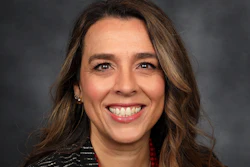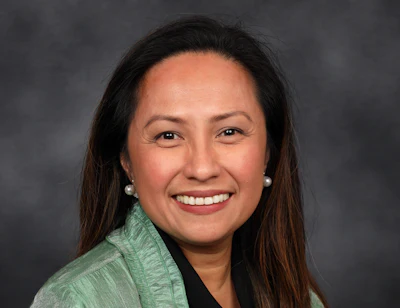
As chief people officer at Lazer Logistics, Candice Mirasol directs the enterprise-wide vision, strategy, and execution for people operations, translating Lazer's people-first mission into measurable outcomes across the organization.
Her portfolio spans workforce planning, organizational effectiveness, employee experience, and cultural transformation. She oversees all strategic and operational aspects of the people function for over 5,800 employees across more than 800 sites in 42 states and Canada, managing a full suite of responsibilities including talent acquisition and recruitment strategy, onboarding and employee integration, talent management and succession planning, employee relations, retention strategy, compensation and benefits architecture, organizational development, and leadership capability building.
She also partners with executive leadership and the board on strategic people initiatives that align organizational systems with company values at every stage of the employee lifecycle.
Her day-to-day engagement involves analyzing workforce trends and performance metrics, driving policy and cultural initiatives, overseeing a multi-functional HR team, and ensuring that people-centered strategy translates into operational effectiveness and measurable business impact across a geographically dispersed, safety-critical logistics workforce.
Mirasol's path to strategic HR leadership was shaped by rigorous training in industrial and organizational psychology combined with over two decades of hands-on experience scaling global operations.
Her early career at Odfjell Ship Management provided deep expertise in compliance, workforce administration, and building high-performing teams across complex, regulated supply chain environments.
She joined Lazer in 2014 as HR director, where she managed scaling operations and supported the company through pivotal moments, including private equity transitions, M&A transactions, and high-volume startup launches.
Within just 10 months of promotion to VP, people operations, in 2023, she was elevated to chief people officer, where under her leadership, Mirasol has built a DEI infrastructure, including the Diversity, Equity, and Inclusion Committee, Women in Logistics affinity group, Wellness Champions network, and Veterans Group.
She's also grown headcount by 11%, including 33% women in the C-Suite, 21% women in leadership, nearly 60% minorities or people of color in leadership, and nearly 65% minorities or people of color across the company; improved retention by 2%; and reduced turnover by 10% while cutting vacancy rates by 50%.
Mirasol was named a winner of this year’s Women in Supply Chain Forum™ award, presented by Food Logistics and Supply & Demand Chain Executive, in the DEI Pioneer category.
Marina Mayer, editor-in-chief of Food Logistics and Supply & Demand Chain Executive and co-founder of the Women in Supply Chain Forum™, sat down with Mirasol to discuss treating workforce metrics as operational metrics, providing frontline leaders the tools and authority to make data-driven decisions and the importance of making women visible in operational leadership.
Food Logistics and Supply & Demand Chain Executive: Your day-to-day work includes spearheading enterprise HR technology initiatives such as the recent HRIS modernization. Walk us through what the HRIS modernization is and why it’s beneficial to your customers.
Candice Mirasol: The HRIS modernization is about giving every employee, from the yard to the office, a single system instead of a patchwork of tools that don’t communicate with one another. It streamlines onboarding, gives frontline leaders real-time visibility into staffing and scheduling, and reduces time spent on manual data entry. For our customers, that translates into more reliably staffed operations. When our leaders can identify a vacancy or scheduling gap as it happens, we can respond sooner and help prevent it from affecting service.
Food Logistics and Supply & Demand Chain Executive: Under your leadership, you’ve grown headcount by 11%, improved retention by 2%, and reduced turnover by 10% while cutting vacancy rates by 50%. What is the secret to success here? What advice do you have for other supply chain organizations challenged with headcount issues?
Mirasol: There isn’t one lever. The key is treating workforce metrics as operational metrics, not just HR metrics. We track vacancy and turnover by site the same way we track throughput or on-time performance, and we put that information directly in the hands of frontline leaders so they can act locally rather than waiting for HR to identify the problem. My advice to other supply chain organizations is to start by building meaningful relationships and alignment with frontline leaders. They are closest to the employee experience and often make the difference in whether someone chooses to stay and grow with the organization.
Food Logistics and Supply & Demand Chain Executive: From where you sit, frontline leaders make or break the employee experience. Looking ahead to the next 12 months, what should companies be doing to better support their frontline leaders?
Mirasol: Give frontline leaders the tools and authority to make data-driven decisions, not just the responsibility for the outcome. Over the next 12 months, companies should invest in targeted, coaching-based development rather than relying solely on compliance training. We also need to reduce the administrative burden that pulls leaders away from their teams and customers. One of the best things we can do for frontline leaders is protect their time so they can spend it where it matters most.
Food Logistics and Supply & Demand Chain Executive: Please share a difficult supply chain disruption you managed and how you turned the challenge into an opportunity.
Mirasol: A severe weather event shut down operations at one of our sites during a peak-volume period, and we were already facing staffing constraints. Rather than addressing the challenge site by site, we activated a cross-trained team from a nearby location to support the operation. We then used that experience to develop a formal contingency staffing plan that could be applied across the network. What could have become a service failure ultimately gave us a stronger model for responding to weather disruptions and unexpected volume surges.
Food Logistics and Supply & Demand Chain Executive: What supply chain trend do you think will have the biggest impact over the next five years?
Mirasol: The balance between technology and workforce strategy will have one of the greatest impacts on supply chain over the next five years. Automation and real-time data are changing how yards operate, but the organizations that succeed will be the ones that use technology to make people more effective, not simply to reduce the need for skilled frontline talent. Labor availability remains a challenge, so companies that successfully pair the right technology with strong people practices will have a significant advantage.
Food Logistics and Supply & Demand Chain Executive: What can organizations do to attract, retain, and develop women in supply chain roles?
Mirasol: Make women visible in operational leadership, not just support functions. Sponsorship is especially important. Women need leaders who will actively put their names forward for stretch assignments and leadership opportunities, not simply offer advice from the sidelines. Organizations also need clear career paths from frontline positions into leadership so women entering operational roles can see what their future in the industry can look like.
Food Logistics and Supply & Demand Chain Executive: If you could go back in time and talk to your younger self, what would you say to her?
Mirasol: I’d tell her to trust what she was seeing on the frontline. Early in my career, I sometimes second-guessed instincts that the data later confirmed. Operations can provide a real-time pulse of an organization before the reports ever do. Learning to trust what I was seeing firsthand, ask the right questions and advocate for it sooner would have saved a lot of time and effort.
Food Logistics and Supply & Demand Chain Executive: If you could leave the audience with one piece of advice about being a woman in the supply chain, what would it be?
Mirasol: Get close to the operation and really understand the people who run it. Credibility in this industry is built on the frontline, not from a distance. Women like our board members Marie Robinson and Sherry Aaholm demonstrate the impact leaders can have when they understand the work well enough to help change it. We should continue learning from women who have paved the way while also being intentional about sharing our own experiences. The next generation needs to see our stories so they can envision themselves continuing that journey.
CLICK HERE to learn more about the winners from this year's Women in Supply Chain Forum™ Award.
CLICK HERE to register, sponsor and/or learn more about this year’s Women in Supply Chain Forum™, Nov. 17-19 in Charleston, S.C.