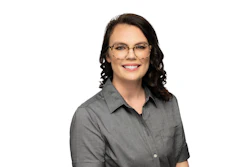
Cecelia Pasos is a warehouse operations leader at Kase (a WSI company), responsible for driving performance across fulfillment operations while developing the people and processes that sustain it.
Day to day, she oversees warehouse and fulfillment execution, managing teams, monitoring operational KPIs, and ensuring order accuracy and on-time shipping performance meet or exceed customer expectations. She is known for building accountability into operations through practical tools: visual KPI boards, productivity tracking, and performance management systems that give both associates and managers clear visibility into how the operation is performing and what's expected of them.
She also partners closely with customers to identify workflow improvements, and has a track record of stepping into underperforming operations and restoring both profitability and client confidence.
She began her supply chain journey more than 30 years ago as a temporary data entry clerk supporting logistics operations for a major retailer. Quickly embracing the complexity and pace of the industry, she was hired full-time as a supervisor within her first year.
Over the course of her career, Pasos has gained extensive experience across retail distribution, manufacturing, event logistics, and third-party logistics operations. While working with major retailers such as Ross Stores, she managed teams of more than 75 associates supporting a newly implemented put-to-light fulfillment system, where under her leadership, the operation consistently maintained a 95% effectiveness rate while regularly achieving weekly performance bonus targets.
She later joined DSV as a supervisor, where she became known for her ability to drive operational performance through visual management, employee engagement, and accountability.
She was later promoted into a director-level role, where she oversaw three facilities, including the startup of a new operation in Texas.
Upon returning to California, she assumed responsibility for the H&M account at Whiplash, where she partnered with leadership teams to redesign workflows that improved productivity, operational performance, and inventory accuracy.
Her expertise in operational turnarounds also led her to assist struggling facilities, helping implement SOPs, retrain teams, and restore profitability while retaining critical customer relationships.
Today, she continues to build on that legacy through her leadership at WSI/Kase, where she's reduced staffing requirements by approximately 40% while improving the facility's handling margin from -8.% to 40%.
She also played a key role in the startup and management of the VEKP account, where she enabled the operation to consistently maintain 99% inventory and order accuracy while achieving 95% on-time shipping performance. She also led the Fontana operation through the loss of a major customer while still increasing annual revenue by more than $100,000.
And, she transformed the culture of the operation and built an environment where team members are encouraged to challenge the status quo, contribute ideas, and take ownership of results.
Pasos was named a winner of this year’s Women in Supply Chain Forum™ award, presented by Food Logistics and Supply & Demand Chain Executive, in the Trailblazers category.
Marina Mayer, editor-in-chief of Food Logistics and Supply & Demand Chain Executive and co-founder of the Women in Supply Chain Forum™, sat down with Pasos to outline what it takes to transform company culture and maintain worker safety: "send everybody home the way they came to work."
CLICK HERE to learn more about the winners from this year's Women in Supply Chain Forum™ Award.
CLICK HERE to register, sponsor and/or learn more about this year’s Women in Supply Chain Forum™, Nov. 17-19 in Charleston, S.C.
Food Logistics and Supply & Demand Chain Executive: Women in Supply Chain Forum™ Award
Cecelia Pasos, Warehouse Manager, Kase (a WSI company)
Category: Trailblazers
Food Logistics and Supply & Demand Chain Executive: Hello, my name is Marina Mayer, Editor-in-Chief of Food Logistics and Supply and Demand Chain Executive, and I am here with Cecilia Pasos, Warehouse Manager for Kase, a WSI company.
Cecilia is a recipient of this year's Women in Supply Chain Forum Award in the Trailblazers category.
As warehouse operations leader, you are known for building accountability into operations through practical tools. What are some of these tools, and why is accountability so important?
Cecelia Pasos: The tools that we use, some of them are systematic tools. That's just to make sure that we're monitoring KPIs, metrics, numbers.
Part of the other piece is the accountability piece, where when we see someone is not meeting the numbers that they need to meet.
It's for us to go out and investigate, see what's happening, what's driving those things? Is it something that we can retrain? Are they having problems with their equipment? Things like that.
But another part of that accountability piece is knowing your people. Is Mary having a bad day? Is something going on with her? Is there a shift or a change in her personality? Let's just go and have a small one-on-one because there could be something that's happening outside that is causing some sort of delay or non-performance.
Is it a skill thing? Or the skill vs. will, that still happens. There are some times that people, their behaviors change, and they start dragging their feet a little bit, or they're stretching things out, they're chit-chatting a little bit more, and we're still running a business, even though we're building a team.
And you have to make sure that everyone is doing their part in their position. The accountability piece comes in at that point to where you have those discussions with them.
And let them know, this is the expectation, and make sure that we set it clear. If you don't have those expectations and you don't have the accountability portion, for everyone individually, then it's hard to set the standard and maintain your productivity level goals.
Food Logistics and Supply & Demand Chain Executive: Over the course of your 30-year career, you've gained extensive experience across retail, distribution, manufacturing, event logistics, and 3PL operations. How are these different markets similar and/or different when it comes to managing safe, productive supply chains?
Pasos: It depends on the similarities for the majority of it, you receive it in, you store it, you ship it out. That's a common factor with any of these platforms. When it comes to manufacturing, you also have to take into accountability when it comes to safe production environments, the type of equipment that you're using. Is everybody trained on that? Do you make sure that they're being maintained on a regular basis? Are we training everybody on what to do or what not to do to maintain a safe work environment? Are we promoting those things?
Safe work environment means, even if it's paper on the ground, even if it's a piece of plastic or a piece of wood, there's very small details that people don't think of, but it's sometimes those small details are the ones that end up getting us in trouble.
So, it's just making sure that everyone is aware, promoting safety, and sending everybody home the way they came to work.
Food Logistics and Supply & Demand Chain Executive: You've also transformed the culture of the operation. Kind of walk us through how you did this, and why that's important.
Pasos: In my career, and not just here, but in my career, when you say good morning or how are you doing, you get a lot of, look away, look down, you don't usually get that interaction. And what that tells me is there hasn't been a lot of getting to know the employees from previous management.
Sometimes I'll see chaos, and I'll see division, where I want a teamwork.
That's the reason why I change it because I want it to be cohesive. I want people not to think of work as a four-letter word.
We spend a lot of our time here, more than we do with family sometimes. And I want that to be a comfortable environment. So, changing the culture, setting some standards, making sure that people are held accountable.
You know what you're responsible for because there’s a difference between the accountability and the responsibility portion.
And the other thing is really getting to know your people. When you start doing employee engagement, and that's one of my favorite things, is employee engagement. I like to have little contests. I like to celebrate the employees, the birthdays and the anniversaries, and let's have a barbecue, you know, why not? They do the job. They are what makes the building run. And when you can make an environment where they feel comfortable and happy to come to work, and granted, everybody's not happy every single day, but it's a more welcoming environment to come into. I'd rather work there than someplace else.
Food Logistics and Supply & Demand Chain Executive: Please share a difficult supply chain disruption you managed, and how you turned that challenge into an opportunity.
Pasos: I've been really fortunate in my career, the majority of it has been out here in California to where I haven't had a big interruption, other than COVID, and I'm sure that everyone over the last few years has expressed probably the same restrictions and the same issues they had with no inventory, and then trying to get employees to come back to work. That's probably the biggest challenge, disruption, that I've ever had, in my career, so I consider myself extremely blessed that I haven't had to experience any of the natural disasters or things like that that go on that happen across the country.
Food Logistics and Supply & Demand Chain Executive: What supply chain trend do you think will have the biggest impact over the next 5 years?
Pasos: I think fulfillment and direct-to-consumer.
There's a lot of competition with Amazon getting into the parcel, so I really think that if anything's going to continue to take off, it is going to be the D2C.
Food Logistics and Supply & Demand Chain Executive: What can organizations do to attract, retain, and develop women in supply chain roles?
Pasos: I think one of the biggest things to attract women in supply chain roles is to promote those roles. Promote that, yes, women, come and apply.
A lot of people think it's just male-dominated industry. There are more women in the supply chain industry now than ever before. In order for companies to retain these women.
I hate to pull the Helen Reddy, “I am woman, hear me roar,” but we are women, hear us roar. And the only thing that we really are looking for is that equality from our male counterparts. Take that glass ceiling, and start breaking it up.
Food Logistics and Supply & Demand Chain Executive: If you could go back in time and talk to your younger self, what's the one thing you would tell her?
Pasos: Go to medical school.
No matter what, you can do this.
Food Logistics and Supply & Demand Chain Executive: If you could leave the audience with one piece of advice about being a woman in the supply chain, what would it be?
Pasos: Don't let anyone tell you that you can't. Because you can.
Food Logistics and Supply & Demand Chain Executive: To learn more about Cecelia and our other Women in Supply Chain Forum award winners, CLICK HERE.
Register for this year's Women in Supply Chain Forum™ at http://www.womeninsupplychainforum.com.