
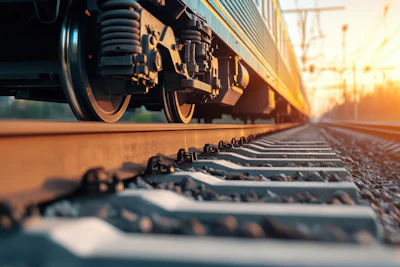
U.S. shippers would increase their use of rail if they had better visibility into goods in transit, according to new research commissioned by Giesecke+Devrient (G+D).
The findings show that freight competitiveness increasingly depends on trusted, real-time data from connected assets, not just the physical movement of goods.
“Supply chain professionals increasingly rely on live, verifiable logistics data to monitor and direct operations, and they want this visibility to extend to freight traveling by rail,” says Simon Wakely, president, Giesecke+Devrient Mobile Security G+D America, Inc. “For rail to play a stronger role in tomorrow’s supply chains, connected assets need to generate trusted data that enables better decisions, stronger accountability and more resilient, competitive logistics operations.”
Key takeaways:
· Only 23% of shippers are currently able to continuously track and monitor the condition of goods moved by rail.
· At the same time, 84% would be more likely to increase their use of rail in future logistics operations if they had greater visibility.
· The leading motivation for greater visibility was the ability to plan and optimize downstream operations, cited by 45%. This was followed by the need for verifiable evidence to contest accessorial and demurrage charges (33%), condition monitoring for perishable, pharmaceutical or hazardous goods (33%), and earlier alerts to theft or unexpected movement (32%).
· Almost three-quarters of respondents (73%) said real-time visibility of goods in transit was a high priority, with almost one in five describing it as critical.
· End-to-end visibility across the freight journey is a key priority for shippers. Yet only 26% of respondents had access to real-time location tracking in rail transport, while 14% were limited to occasional location updates and another 14% to departure and arrival times.
· Respondents identified lack of visibility as their No. 1 frustration with rail as a mode of transport.
· 77% say at least a quarter of their freight shipments move by rail.
· Nine in ten respondents (90%) said they were extremely or somewhat concerned about cargo theft.
· Four in five decision-makers (80%) said charges such as demurrage and accessorial fees were at least sometimes inaccurate, excessive or otherwise worth contesting. A further 80% said full visibility into goods in transit would make them more likely to challenge such charges.

![Top Tech Logo 2026 Vertical [color]](https://img.sdcexec.com/mindful/acbm/workspaces/default/uploads/2026/04/top-tech-logo-2026-vertical-color.mWl7RAiZmg.png?auto=format%2Ccompress&bg=fff&fill-color=fff&fit=fill&h=100&q=70&w=100)

![Top Tech Logo 2026 Vertical [color]](https://img.sdcexec.com/mindful/acbm/workspaces/default/uploads/2026/04/top-tech-logo-2026-vertical-color.mWl7RAiZmg.png?auto=format%2Ccompress&bg=fff&fill-color=fff&fit=fill&h=167&q=70&w=250)


![Top Tech Logo 2026 Vertical [color]](https://img.sdcexec.com/mindful/acbm/workspaces/default/uploads/2026/04/top-tech-logo-2026-vertical-color.mWl7RAiZmg.png?ar=16%3A9&auto=format%2Ccompress&bg=fff&dpr=2&fill-color=fff&fit=fill&h=135&q=70&w=240)


