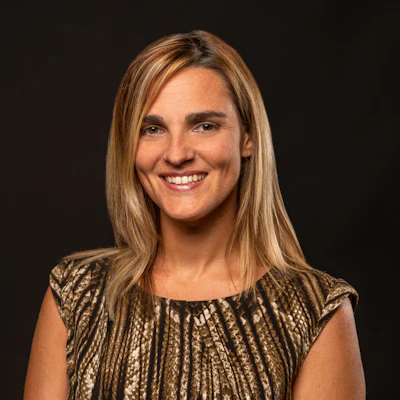
Nadia Damiani is SVP at Fuel Transport and president of the Fuel Truck Division, where she leads the administrative and strategic backbone of the business and works with the CEO to ensure the company has the structure, discipline, and infrastructure required to scale across North America.
Her experience spans finance, human resources, legal, technology, and corporate administration, where she ensures these areas operate as an integrated system, aligning people, processes, and strategy to support performance across the organization. In practice, this means overseeing financial performance and cash flow across Canada, the United States, and Mexico; guiding capital allocation; providing support in key organizational decisions; evaluating technology and vendor relationships; and ensuring the policies and processes that govern the business remain fit for purpose.
A substantial portion of her work involves organizational architecture: evaluating team structures, making headcount decisions across divisions, and hiring for critical leadership roles. When the business requires restructuring - whether to support growth, enter a new market, or improve operational efficiency - she leads that process.
As Fuel has expanded its North American footprint, she has built out leadership teams, established operational protocols, and integrated systems across new markets.
Damiani began her career in finance and business case development at Microcell Telecommunications during the early era of mobile communications, developing expertise in strategic planning and analytical rigor.
At a pivotal moment in her career, she stepped away from her career to raise her children. She later joined Fuel Transport in 2005, when the company was still operating with limited structure across finance, operations, and administration.
Early on, she introduced processes around cash flow, spending, and financial reporting, accelerating collections, managing capital more closely, and bringing greater financial precision.
Damiani was named a winner of this year’s Women in Supply Chain Forum™ award, presented by Food Logistics and Supply & Demand Chain Executive, in the Trailblazers category.
Marina Mayer, editor-in-chief of Food Logistics and Supply & Demand Chain Executive and co-founder of the Women in Supply Chain Forum™, sat down with Damiani to discuss technology, supply chain disruptions and the importance of putting strategy before speed.
Food Logistics and Supply & Demand Chain Executive: A substantial portion of your work involves organizational architecture. What does this mean, and what are some of the key trends you're seeing with regards to hiring and retaining employees?
Nadia Damiani: Organizing architecture at Fuel, I take care of everything you would consider, back office, for one. I oversee anything administration, finance, marketing, IT, legal, compliance, anything office management, business development projects, those fall into my category.
When I partnered up with the owner, we kind of split those duties in two. He was very sales op-centric, and I took care of the development of anything infrastructure in the background for the business, so anything strategy and foundation. I'd like to have a good understanding of our needs and then come up with the solutions that I think are viable and sustainable over the longer term.
Foundation in the business for me is essential for growth. That was how we came together, and that has been a fundamental part of my contributions to the business.
As for hiring and retaining employees, it's who you look for, the type of people that you look for, people that are not just going to do. You want thinkers, you want people that want to contribute, share ideas, but then are able to give feedback and want to understand the direction of the business and contribute towards those goals.
I feel that the type of people you look for are specific, but then too, the retention is that it's motivating for them because they're not just doing a job and every day coming in and playing a role. They are contributing to the business' decisions, the growth, they're participating in our success.
That has been, I think, a major reason why we have the type of people we have in Fuel, and the type of retention that we have in Fuel. We do have some long-standing employees with us, and that's something we're very proud of.
Food Logistics and Supply & Demand Chain Executive: Over the past year, you played a key role in advancing one of Fuel's most significant technology initiatives, and that was integrating AI into core operations across North America. Walk us through what this entails and how this benefits your customers.
Damiani: AI is a buzzword to start, right? So there's different ways of looking at what that means.
From Fuel's perspective, and from a logistics perspective, I think our industry is actually not that advanced from a technical perspective. Technology and AI is, I think, something everybody wants to have. And potentially not something that's that easy to integrate. Information sharing is not that available, and it's a challenge.
Tech has been an initiative in Fuel for a very long time. From the moment we started, we always looked to be advanced in technology and being able to find technological solutions to be able to well service our clients and to integrate with our clients. So it's always been of value for us.
The integration of AI in the last few years, or the focus there, has been an initiative that we took on. One, because we need to be better and faster without relying on clerical functions. We want our people to be more strategic to focus on industry, strategic industry decisions, bringing value to clients by understanding their networks and their needs, and then using the tools to be faster, to be better, to be more efficient, to give visibility and transparency to our clients.
The benefits are integrating AI to offer faster and quicker services.
But at the same token, maintaining the strategic side and the relationship so that our clients have, access to people when they need it and access to information when they want it. There's a difference, right? The need of dealing with people, explaining their situations, and getting more custom responses is where our people need, or we want our people to be.
And the tech and the AI is speed. Clerical functions, connectivity, and most importantly, visibility. Clients are looking to have a tight grasp on their freight, on their business, and they want to maintain that visibility without all the responsibilities and obligations of having to move their freight or everything logistics that is what we specialize in.
Our initiatives with AI are focused on giving that connectivity, that speed, and that visibility to our clients at better rates, which is an important element in today's market, without losing that human element and the personalized touch of strategy and the thinking part, or the planning part that the client doesn't want to do for themselves, and needs somebody to take care of for them.
That's our current initiative from an AI perspective.
Food Logistics and Supply & Demand Chain Executive: One area of focus for you over the next 12 months is to scale with strategy and precision, not just speed. What advice do you have for other supply chain organizations who maybe put speed before strategy?
Damiani: I think they'll learn quickly that if you try to go too fast, you're probably going to end up either spending a lot of money trying to fix what you did or potentially not solving your real problem. So, for me, tech is a buzzword. Everybody wants tech, everybody wants to move quickly, everybody wants to solve quickly. We all have problems to solve, we all need to be more efficient, we're all trying to access the same market, the same volumes. And if you go too fast, you don't understand what you're trying to achieve, and you don't get to the core solutions, the real problems that need to be fixed; you're just creating Band-Aids, and chances are, you're not going to end up winning at the end. It's just going to probably cost you a lot more money, and you're not going to get the results that you're looking for.
Historically, that would be an experience. We've fallen into that trap here and there, where you want to move more quickly than you should, and what ends up happening is you have to circle back and start again. It's lost time, it's lost resources, it's just not value-added.
So, from our perspective, you take a step back, understand your needs, understand the goals, study properly what it is that you need to achieve, and what wins you're looking for. Phase them in. And, get to the core problems so you're solving real issues.
And over time, I think you win more, and you gain more success because you'd start properly, you can build off of something. If you start incorrectly, again, you get a weak foundation, and you can't build. Eventually, it's going to start to crumble from underneath.
For me, if you're strategic up front, you take a bit more time, you focus, you establish a good foundation, and then you build.
Chances are you’re going to be able to get further, longer and faster than if you start too fast and it's weak. You have a weak, a weak infrastructure.
Food Logistics and Supply & Demand Chain Executive: Please share a difficult supply chain disruption you managed, and how you turned that challenge into an opportunity.
Damiani: I guess everybody would turn to the idea of COVID.
COVID was a huge supply chain situation for many businesses. Again, we're in logistics and supply transportation. We were subject to what a lot of our customers were doing to get through the adversity.
Internally, what we had to manage was our personnel. We were in an industry where we felt we had to be essential, we had to be on-site.
And, that was something that was not necessarily an easy task for businesses because the governments were putting in some significant regulations. There were health considerations. And, perception and safety was a critical piece.
We actually went further and searched for technology to allow us to integrate our people back into the office much more quickly than a lot of companies were, and we reconfigured our space.
We bought technology that was giving us visibility on the staff and the distancing between them, so they were always in a safe distance from each other, and the tech was telling us if people were crossing, so from an infection perspective, we were in control of the environment. We purchased COVID tests. We put in a whole nursing team.
We created a very safe, environment for our staff. Seeing as they had to be here, and in the beginning, there was a lot of communication and a lot of resistance, and then over time, what happened was the staff became very grateful and very appreciative of the business.
They liked the fact that they were getting out of their homes, they liked the fact that they'd come to work and connect with their colleagues, unlike some of their family and friends that were stuck in lockdown for a long time. The performance went up, because at the time, we had to continue to service our clients, and performance at a distance was a challenge.
So, performance for the business went up, our staff was really happy and appreciative and actually created a lot of retention vs. what other businesses were experiencing, where people were switching from company to company because there was no more allegiance, there was no more connection with our staff.
We took a very difficult situation. We invested quite a bit of money on some tech and on some health solutions. We brought in some nurses and testing. And, created an environment that people felt they could come to work, they were happy in, and our performance at that time and our service standards went up, especially in comparison to what other logistics companies were doing, from what we heard.
And our clients were really happy with us, so we ended up picking up additional business, new accounts, and our employees were really happy with us.
We took something that was really negative and difficult for people, and we created an environment where people had professionals to turn to for medical concerns. We created an environment where people had opportunities to get out into the day and be with colleagues, and yet still be safe.
And we created an environment that the business could have optimal productivity, during a time where a lot of companies were struggling to continue their operations in a comfortable, reliable fashion.
Food Logistics and Supply & Demand Chain Executive: What supply chain trend do you think will have the biggest impact over the next 5 years?
Damiani: If I had a crystal ball, I think technology is the trend. I think that the industry and the economy, as we can see, are always the unknowns. We don't control the market, we don't control the economy, and what any country is deciding to do at any given day, and how businesses are going to manage in difficult times like we saw, even just with, COVID, right? So it doesn't have to be anything that is controlled by the human, it could be just adverse situations. Technology is going to solve for that, or help in those situations.
With regards to the ability to continue to continue to connect, and, the visibilities and the reliability around what we do is going to come from technology. In our industry, in logistics, in the supply chain, a lot of companies have tech.
But a lot of businesses are not sharing and interacting efficiently with technology. So the trend is, how are businesses in our industry going to better connect? And, how are we going to provide the right visibilities and the right service based on the needs of our clients?
It's all going to come from the AI aspect of the world. Faster, more efficient visibility, better connectivities, it’s going to make a difference. It's going to make a material difference for logistics companies, for sure, but in the supply chain in general.
Food Logistics and Supply & Demand Chain Executive: What can organizations be doing to attract, retain, and develop women in supply chain roles?
Damiani: Honestly, I think you'll notice that there's a lot more women in supply chain than in the past. I think businesses are already doing it. I think it's not what businesses can do, it's more what should women be doing?
I think women need to realize that logistics is not a man's world. It tends to be the it is, historically. The world is a man's world, to be honest. Women need to be more bold. We need to understand that we actually contribute. We are strategic.
We can sit at the table with some of these other players, and we can contribute. You don't need to be the shiniest person in the room, and you don't need to be the loudest person in the room. You need to be confident. You need to know and respect what you do know and how you can contribute, and you need to be bold enough to sit there and listen well and express your ideas with confidence.
And I think that at some point, they have no choice but to hear you. If you make sense, and you belong there, then you belong at that table.
I don't know if businesses or organizations are going to do anything to attract women. I think women need to understand how they can contribute, and if you really want something, you should attempt to enter the room. And anybody who is smart enough to recognize talent and who wants to grow and develop, they're not going to turn a blind eye just because you're a woman.
Any business that wants to grow and succeed shouldn't be looking at the sex of the candidate.
And so, I don't think it's businesses, I think it's women. I think we need to understand that we belong, and we can make an impact.
And we should be bold enough to put ourselves at the table.
Food Logistics and Supply & Demand Chain Executive: If you could go back in time and talk to your younger self, what would you say to her?
Damiani: Exactly that. I would say be bold and be confident, and it is what I tell my daughters. I have two daughters, and I mean, they were very young when I started telling them, you should never turn a blind eye to an opportunity. Every opportunity should be a consideration. You don't have to do everything, but you should never turn away from any opportunity that comes your way. It's your choice. You choose what you do and how you do it.
So, I think if I would go back to myself, I was very timid. I am a behind-the-scenes person. I don't talk about myself, my successes, I never do. So this, for me, is a very uncomfortable situation. But the opportunity came, and I said, you know what? I'm going to do it because this is what I would tell other women to do. Speak up. Evaluate your opportunities, and you choose and you decide if it's a fit for you, if you can do it, if you want to do it, and if you do, you should be bold enough to put yourself out there, and don't be afraid because that's what makes us better and stronger. There's nothing better than trying something, not succeeding, and recognizing you have to recognize what you did wrong, or what went wrong, and what you can do next time to be better at it. Not to shy away from it and say, I failed, it didn't go well, I can't do this. No, it's go out there. Try your best, and if it doesn't work out, you're going to be better next time because we're smart enough to learn from that, and that's what we need to be doing.
I've spent 21 years in this company. And we've done a lot of great things. And if I had to go back and look back, I didn't think I could do any of it.
But I came in, and I sat at the table with some pretty strong people, and I built a backbone, and I realized that I can play a role. And so I would tell anybody, including myself when I was younger, get at the table, it's okay.
Get there, listen first. And, be bold. Be strong.
Food Logistics and Supply & Demand Chain Executive: If you could leave the audience with one piece of advice about being a woman in the supply chain, what would it be?
Damiani: Have confidence. It's a great industry. It's dynamic. And I believe that women are great for this industry because we are reflective people, women are great listeners. And we're great planners and strategists. And that's what this industry needs. It needs strategic minds, it doesn't need the emotion on your sleeve
It needs a fast, responsive decision maker. It needs reflective, strong-minded, energetic people, and women are strong and intelligent, and we are the best listeners that exist. So, for me, if you're a woman and you're looking to make an impact, logistics, supply chain, we need people like us.
CLICK HERE to learn more about the winners from this year's Women in Supply Chain Forum™ Award.
CLICK HERE to register, sponsor and/or learn more about this year’s Women in Supply Chain Forum™, Nov. 17-19 in Charleston, S.C.