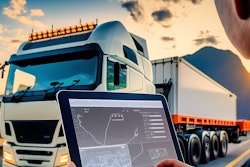
It's no surprise that AI and other emerging technologies have infiltrated the supply chains of tomorrow. Everything from Agentic AI bots and AI-powered visibility solutions to document automation, AI-driven data governance and third-party risk management features continue to catapult fleets, distribution centers, manufacturing sites and operations into a world where robots and humans work side by side.
It's a new era of accountability, resilience, quality control, food safety, worker safety, enforced sustainable practices and more.
And emerging technologies are leading the charge.
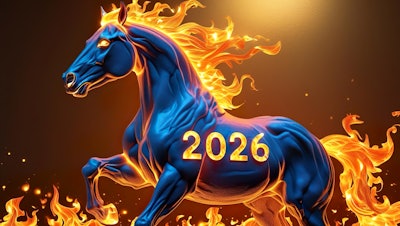
That's why it's fitting that 2026 is the Year of the Fire Horse.
According to Chinese astrology, the Fire Horse is confident, agreeable, and responsible, although tend to dislike being reined in by others.
The same can be said for today's supply chains, who exhibit signs of confidence, flexibility and responsibility (especially with regards to the ever-changing rules and regulations), but also like to operate on their own terms.
Rewind to 2020, dubbed the Year of Upended Supply Chains, which thanks to the COVID-19 pandemic, couldn't have been more fitting.
Then, 2021 hit with hope, dubbed as the Year of Mended Supply Chains, until shortly after the New Year, a stranded Evergreen container ship blocked navigation in Egypt’s Suez Canal, creating a ripple effect of broken supply chain operations.
Although supply chains started to heal, the damage was done, marking 2022 as the State of Grim Supply Chains.
2023 became the Year of Bottlenecks, leaving 2024 to be the Year of the Rabbit, which according to Chinese culture, is a symbol of longevity, peace and prosperity.
2025 became the Year of the Snake (er, success), resembling success and financial luck, both terms the supply chain industry held out hopes for after a year of economical uncertainty, geopolitical strife and supply chain disruptions beyond repair.
Fast forward to today, and while much of the economical strife and supply chain disruptions still exist, the development and implementation of AI-focused solutions and technologies are revolutionizing supply chain management.
As outlined in MHI's trends forecast, many of today's supply chain trends point to a new era of visibility, resilience and intelligence amid ongoing uncertainty.
In Deloitte's findings, manufacturers are leveraging technology to enhance their talent sourcing, screening, and training processes.
And, research from Mecalux and the MIT Intelligent Logistics Systems Lab shows that AI and machine learning are no longer experimental tools but core drivers of productivity, accuracy, and workforce evolution, and most businesses now dedicate between 11-30% of their warehouse technology budgets to AI and machine learning initiatives.
The Fire Horse is associated with energetic, passionate, and transformative qualities. And, the last time this zodiac sign presented itself was in 1966.
Guess what happened in 1966?
The supply chain space experienced a shift from rail to trucking for time-sensitive freight; saw the beginning of computerization for logistics planning; and underwent significant labor negotiations surrounding the adoption of shipping containers.
IBM developed its first computerized inventory and forecasting system.
The International Longshoremen's Association (ILA) accepted the use of the container in port operations while securing a Guaranteed Annual Income (GAI) for its members to mitigate potential job losses from the new technology.
Former President Lyndon B. Johnson signed Public Law 89–670 in 1966, establishing the United States Department of Transportation (DOT).
If those monumental changes to the transportation occurred at a time where AI and other emerging technologies weren't available, 2026 will be on fire.