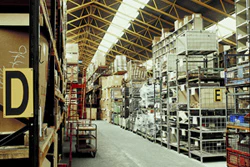
In this article, I will try to provide insight on the topic of how to de-couple complexity by using a structured method and approach to product rationalization. Complexity in this context refers to proliferation of individual items, either in input components and subassemblies or finished goods. Excessive item counts can bring a supply chain improvement effort to its knees.
In recent surveys, company executives have repeatedly said supply chain improvement initiatives and investments in systems are top corporate priorities. Successful initiatives have cut total supply chain management costs up to 50 percent and improved performance on inventory turns up to 100 percent among top industry performers. A lot of companies, however, focus on technology-based Supply Chain enhancements, and rightfully so, as advancements in Web-based optimization have convinced many executives that the time for breakthrough performance improvement is now. However, as companies are gaining experience with these initiatives, they are finding there is more to a solution than just installing software. Real gains depend on substantial changes in operating practices. One practice presenting challenges in supply chain is complexity management.
Product complexity and product/stock-keeping unit (SKU) proliferation reduce the efficiency and effectiveness of a company's overall supply chain. Product complexity and proliferation impact areas of the organization that include: customer order processing, manufacturing planning and scheduling, purchasing, inventory management, and quality. The ability of an organization to manage product complexity and proliferation generally results in cost avoidance and better control of operations.
Why Does Product Proliferation Happen?
Much has been written about what the causes of product proliferation are, so as part of this endeavor more of my focus will be on how to deal with it, rather than the why and what of it. Nevertheless, to put product rationalization in perspective, some of the major reasons why companies get countless SKUs in their arsenal are:
- One family grows into multiple SKUs as the packaging variations are put in place
- As companies go through acquisitions, they acquire more SKUs
- Sales incentive structures in some companies tend to cause more proliferation as the salesmen will sell whatever "a" customer wants as long as their incentives are tied to just how much they sell.
- Companies do not put the same emphasis on managing the products at the end of their life cycle as they do when new products are introduced, leading to lingering SKUs.
What Does Product Proliferation Create? Complexity.
- In Manufacturing, SKU proliferation will lead to frequent setups and short production runs, driving up manufacturing costs.
- For supply chains, proliferation of SKUs can cause difficulties in forecasting sales volumes, ultimately resulting in increased inventory and transportation costs.
- For Sales and Marketing proliferation can result in dilution of brand power and shelf space clutter amongst other things.
- For Procurement, proliferation can create supplier fragmentation leading to loss of buying leverage and ultimately higher material costs.
How to Manage Product Proliferation
Now that we have SKU proliferation, the question is how do you deal with it to make it go away? It's not as simple as just dropping SKUs. It might seem the answer to all these problems is to narrow component selection and finished goods offerings to just a few items. After all, manufacturers frequently hear that 20 percent of products account for 80 percent of sales. But it's not that simple. If not managed carefully, the same steps that may help simplify the supply chain can more than offset that benefit by reducing revenue. I will provide you a real life example, from one of my previous employers, where I lead a team successfully through the product rationalization/complexity reduction effort. This is a large publicly traded specialty chemical manufacturer, supplying various industries including consumer packaged goods (CPG), construction, defense, etc.
Background:
It started with a simple e-mail from our Global Director of Manufacturing, wherein he asked his Supply Chain Managers to provide him a list of items that gave us the most headaches to manage and what would we gain or lose if we eliminated them. For me, images of items that caused stock-outs, created warehousing pandemics and caused our COPQ (cost of poor quality) to soar came rushing to mind. As I started to list all the items, a management decree came to my mind: "Don't go to your boss with problems, give him a solution." Hence began the process of how to eliminate those items.
Project Stage 1: Scoping and Planning
Formation of the Headache Index:
The word headache spurred a thought in me, and I asked myself, "What if I created a 'Headache Index,' which would simply represent a list of items, sorted high to low, signifying the most disliked items?" And then, how would I calculate the most disliked items?
I started with my trusty Excel and extracted the Sales history for all SKUs for the past year. I applied three financial filters for starters (see Exhibit A.), but decided that couldn't be enough, as Marketing would have eliminated these SKUs before now if it had been. So then I came up with questions to ask other departments in order to grow the list of criteria that would make the Headache Index more comprehensive. Those were:
- R&D for design Stability
- Manufacturing for Complexity and Capacity/Changeover Issues
- Quality Control for Spoilage
- Marketing for:
— Was it a core product and
— Whether the product was replaceable by a close alternative or not - EH&S (Environment, Health and Safety) for any safety issues that were associated
I gave the above departments the "Headache" list grouped by product families and asked them to rate them on a scale of 1 to 5, 1 being worst and 5 being excellent for the criteria listed above. When the data came back I consolidated the list by weighting the criteria, which was a bit subjective to begin with. The most weighting I gave was to the individual Gross Margin contribution and the Marketing Core Product Strategy and Replaceability questions. I did this primarily to balance profitability with potential for loss of revenue. This balance is extremely important as lost revenue can very quickly offset the complexity related cost reductions. Once Excel did the math I had a weighted "Headache Index." Then I plotted the distribution of the index and determined three categories, "Green" for "Go," "Orange" for "Check," and "Red" for "Gone" (See Exhibit A.). This result told me that I needed to get rid of 50 percent of our SKUs.
Exhibit A (Formation of the Headache Index)
What's In It For Me — the Total Cost Model
I sent the in-depth Excel analysis to my boss and the Global Director of Manufacturing. Their comments were, "Superb analysis; now how do we sell this? What are the rewards?"
Depending on the industry, type of Company and extent of rationalization, SKU reduction could yield the following tangible benefits:
- Improved manufacturing efficiency by reducing changeovers, leading to reduced unit cost.
- Inventory reduction for both finished goods and raw materials (including packaging) leading to an improved cash flow position or better return on assets for the company.
- Reduced warehousing, cost of capital and obsolescence tied directly to inventory reduction
- Raw material and packaging spend reduction due to consolidation, once again leading to reduced unit cost.
I set up a spreadsheet that captured the above benefits with some assumptions. Some of the data would have to come from individual departments, but standard industry benchmarks could be used for initial model creation, which could be tightened later once buy-in is created and a team is formed. Initial assumptions and calculations would have to be made regarding:
- What SKU will replace the rationalized SKU?
- What is the cost of manufacturing complexity (cost of changeovers)?
- What is the lead time and inventory strategy (make-to-stock v/s make-to-order) of the SKU being rationalized v/s the SKU replacing it?
- What are the historical obsolescence and warehousing costs as a percent of inventory?
- What is the inventory carrying cost as per the Company financial policy?
- What is the contribution to the overhead calculation?
Once I created the model, the rolled up number was large enough to turn heads. We presented this to our division General Manager, and he was immediately behind us. He let us know that he would be the sponsor for the project and a high-level team needed to be formed.
Project Sponsorship and Project Team Formation
We formed a cross-functional team, the members of which were suggested by the direct reports of the General Manager. All the above departments I had surveyed earlier were included. The key members of this team were the two marketing/sales reps, as they had the toughest job at hand, first working with their teams to understand what SKUs would replace the SKUs being rationalized, and then getting their teams to sell that change to their customers and receive their input.
Project Stage 2: Analysis and Negotiation
Marketing and Sales Work Sessions
We spent countless hours with our Marketing team members going through the entire SKU list. From this effort emerged the core packages we wanted to carry. The data actually drove us to the answer, but there were some outliers, which the Marketing folks promised to sell to their teams. The list was then presented at the next national Sales meeting, which included a working session to educate the sales team on the list and our findings. They spend a good half day further refining the list and suggesting alternatives where applicable.
Two-phased Implementation plan
When the project team met next, Marketing came back with their list, which was probably 95 percent unadulterated. It was amazing how much they knew about the whole portfolio before their internal meeting and how much they were able to sell our rationalization strategy to their teammates. They suggested a two-phased implementation strategy:
1.) The first phase would start in the short term (within the next three to six weeks) and cover about 70 percent of the items. This was obviously the one that the team thought was easier to begin with and would not require any customer trials.
2.) The second phase would be longer term (within the next six months) and cover about 30 percent of the SKUs. These were the items that the team thought they needed more time to convince the customers and would require trials.
Both phases had a conversion or rationalization date that was within three months of the start of implementation. The timing and two-phased implementation plan was partly to bleed the inventory at the customers and to conduct trials if necessary.
Project Stage 3: Communication & Preparation
We then created an implementation plan that was to be communicated to all internal departments. A comprehensive list of original v/s replacement SKUs was created. We communicated the roll-out plan with customers and internal departments. The list of SKUs included the timing of each, if a product/engineering change process was required, and action items (who does what). We were going to use this list to track progress going forward.
Project Stage 4: Inventory Ramp Up/Ramp Down
Next was the inventory ramp up/ramp down phase where we created and processed product/engineering changes for the affected SKUs, analyzed consolidation and change of demand, and updated replenishment parameters in the company's materials requirements planning system. We also updated and issued a new product/sales catalog to internal and external customers. Updated forecasts were also sent to the affected raw material and packaging suppliers where the impact was significant (+/- 10 percent).
Project Stage 5: Go-live
Finally, in preparation for going live, inventory of old SKUs, if any, was reviewed weekly. We worked with the sales people to sell what was remaining, sometimes at a discount. We continued to flag the SKUs for deletion in the company's enterprise resource planning system. We monitored inventory levels for make-to-stock strategy SKUs that were being eliminated. Finally, we had customer service monitor customer service levels, so we did not let up on the service levels during the change-over process. The concrete deliverables of this phase were no stranded inventory and a list of old SKUs flagged for deletion by our master data group.
Control Plan (How to Avoid SKU Proliferation)
Now that we have a successfully implemented the project, how are we to make sure that what was done sticks? One of the key measures of success for this effort is to have a solid control plan in place that keeps the proliferation from creeping in again. Some of the key elements of the control plan are:
- Planning and Inventory Management where the inventory of rationalized SKUs is monitored and only the agreed upon SKUs are planned to be produced.
- Deletion of Rationalized SKUs where the master data group in the company makes sure that the SKUs in question are deactivated from the enterprise system, so that no new orders can be entered against them and they will not linger.
- Customer Conversion to Chosen SKUs where Sales makes sure that targeted customers actually do convert to the alternatives chosen and agreed to.
- Sunrise and Sunset Rules: Sunrise rules need to be created where a cross-functional committee makes a decision on whether a new SKU is viable or not by focusing on some of the same criterion described in the formation of the "Headache Index" above. The same thought process is applicable with the creation of Sunset rules for identifying and retiring SKUs at the end of their life cycle.
Benefits Accrued
I left for another opportunity as we went live on Phase 2 of the project and was curious to see what the results were. Here is what was reported to me as far as the results are concerned:
- In spite of adding a handful of new innovative items, the North American sales SKUs for 2006 were cut by 55 percent as compared to 2005. More importantly, this did not reduce the revenue, infact the revenue was up.
- The impact on working capital was over $1.2 million. Total inventory as measured in days on hand outstanding was reduced by 39 percent.
- Operationally, the project strengthened the level loading in all three departments and freed up some hourly positions, thus allowing the company to staff a second shift in one of the departments to support the growth driven by new products.
- Customer service level as measured by on-time deliveries were up in 2006, averaging 95-97 percent compared to a prior range of 90-95 percent.
- Revenue increased by 5 percent with +1.5 percent volume increases, and gross margins improved enough to offset the raw material and commodity cost increases. This was driven partly by keeping higher margin SKUs in the core portfolio.
I was also told me that there have been several sincere debates, some rather passionate and heated, about a few SKUs that have been added, and he has played the role of keeping the complexity low.
Key Success Factors
In summary, here are some of the key success factors for any product rationalization /complexity reduction effort:
- Sponsorship from Senior Management, so everyone in the organization, and especially the project team, understands that it is a high-profile effort and results need to be delivered.
- Marketing/Sales partnership and commitment, without which the effort would go nowhere. If I had to choose one, this is the most important factor contributing to the success of the effort.
- Replacement strategy, where Marketing/Sales decide whether products can be replaced and are able to drive the strategy to the customer.
- A well-thought-out control plan with metrics to avoid reverting back to the original state.
- Accessible sales and cost data to develop a clear understanding of the impact caused by SKU proliferation, which is the starting point of the "headache Index."